
Most advice about sharks in Cozumel starts from the wrong assumption. Visitors are often told to expect a shark-focused trip, but Cozumel is really a reef destination where nurse sharks are the reliable resident encounter and everything else is a bonus layered on top of drift diving, walls, and swim-throughs. If you book with that mental model, the island makes sense fast. If you don't, you can end up disappointed by the exact dives Cozumel is famous for.
Table of Contents
- What Shark Diving in Cozumel Actually Means
- Shark Species You Can See Around Cozumel
- Cozumel Dive Sites Known for Shark Sightings
- Seasonal Patterns and When Sightings Spike
- Safety, Risk, and Reading the Local Record Honestly
- Booking a Guided Shark-Aware Dive or Snorkel
- Responsible Interaction and Conservation Etiquette
- Planning Your Trip Around Realistic Shark Expectations
What Shark Diving in Cozumel Actually Means
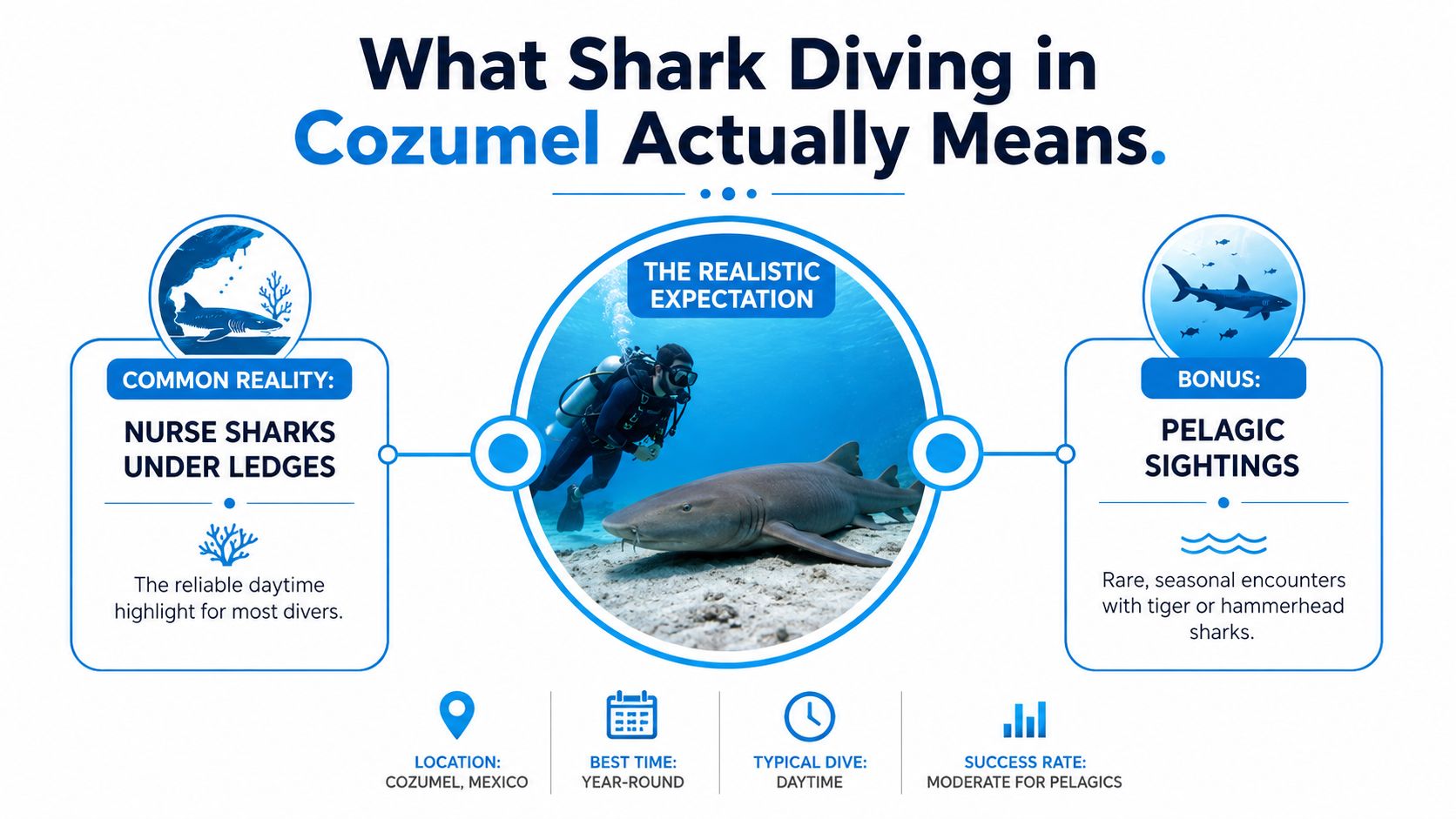
A lot of search traffic for sharks in Cozumel mixes three different things. There are reef-resident sharks that you can realistically see on normal dives, seasonal pelagics that show up only some of the time, and mainland day-trip species that belong to nearby waters rather than Cozumel proper. That distinction matters because Cozumel is marketed for reef structure, drift diving, and marine park logistics, not for a guaranteed shark spectacle.
The practical reality on Cozumel reefs
The highest-probability encounter is the Atlantic nurse shark, a bottom-dwelling species that rests under ledges and in reef cavities during the day. That's why many divers see the same behavior repeatedly, a shark tucked into shade, another one resting nearby, or several stacked in one cave. It's a calm, site-dependent sighting, not a chase scene.
The better way to think about shark diving here is simple, reef first, shark second. That also keeps expectations aligned with how local operators run the day, especially if you're following a guide from a respected shop such as Scuba Life Cozumel's diving guide. Their value is in local site selection and safe execution, not in promising a shark show that no one can control.
What belongs to Cozumel, and what doesn't
Some species are part of the Cozumel dive conversation because they're seen on local reefs or southern walls. Others get pulled into generic “Cozumel shark” content because people blur the island with nearby mainland sites or broader Riviera Maya trips. Bull sharks are the classic example of that confusion, since they're much more associated with the winter corridor between Cozumel and the mainland than with a typical reef drift.
That's why honest booking language matters. If an operator sells Cozumel as a high-probability shark trip, be skeptical. If they describe it as a reef dive with a real chance of nurse sharks and a smaller chance of pelagics, they're describing the island accurately.
Shark Species You Can See Around Cozumel
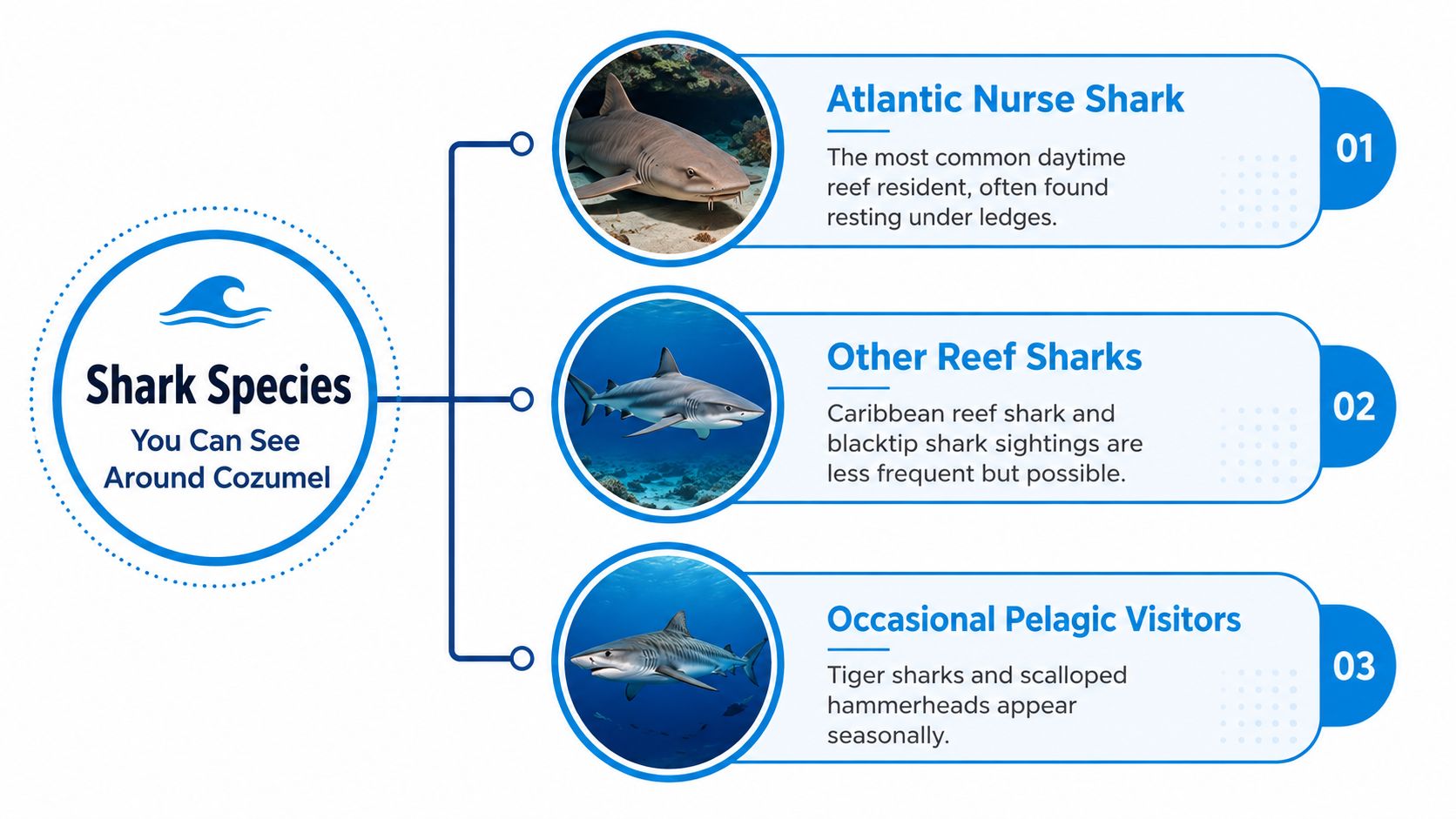
The species list around Cozumel makes more sense if you sort it by likelihood, not by excitement. Start with the animal you're most likely to see, then move down the ladder to the sharks that show up less often and in more specific conditions.
The resident reef shark
The Atlantic nurse shark is the anchor species for local diving. It's nocturnal, bottom-dwelling, and built for resting in shaded reef structure during daylight, which is why divers often find it under ledges, in overhangs, or tucked into a cave mouth. You're not looking for speed or distance here, you're looking for a resting animal that may stay in place long enough for a calm, clean look.
On a good Cozumel dive, the nurse shark is often the one you recognize instantly because of its shape and behavior. The sighting is usually quiet and deliberate, and that's part of the appeal. For a broader refresher on how Caribbean reef fish and common species shift with conditions, a useful companion resource is the guide to Caribbean fish traits and seasons from CatchAnything.com.
The occasional reef and pelagic visitors
Caribbean reef sharks are less common and usually deeper, especially around more exposed wall sites. When they do appear, it's often as a quick transit along the blue rather than a lingering close pass. Bull sharks are best treated as a seasonal possibility, not a standard reef encounter, and hammerheads are rarer still.
A few visitors also ask about tiger sharks and whale sharks. Tiger sharks belong in the “possible but uncommon” category, while whale sharks are not a normal Cozumel reef encounter at all. If your goal is whale sharks specifically, that belongs on a different itinerary.
Practical rule: if you can't name the site, the season, and the species together, you're probably reading marketing copy, not dive planning.
The YouTube briefing above is worth pairing with a local operator's site talk, because shark ID is much easier when you already know what silhouettes to expect.
Cozumel Dive Sites Known for Shark Sightings
Shark encounters in Cozumel are tied to site choice as much as anything else. A diver who picks a southern wall for blue-water visibility is chasing a different outcome from someone who wants a mid-island reef with ledges and swim-throughs where resting nurse sharks are more likely.
Southern walls and deeper structure
The Santa Rosa wall complex and Punta Sur are the names most often tied to deeper-water shark potential. These sites give you the kind of wall profile and current exposure that can bring in more mobile species, including occasional Caribbean reef sharks when conditions line up. They're also the kind of dives where a guide's local judgment matters more than any generic site description.
If you want a concise comparison of site character before booking, the best dive sites Cozumel guide is the right place to cross-check which reefs fit your experience level and your animal expectations. Cozumel operators use that same logic when they decide whether to send a group south, stay mid-island, or keep the day centered on easier reef work.
Mid-island reefs and winter channels
Palancar and Columbia are the places most visitors associate with classic reef diving, and that's where nurse shark sightings make the most sense. The structure, ledges, and swim-throughs create resting spots, which is exactly what a nurse shark wants during the day. These sites don't promise sharks, but they do give you the habitat where the odds are better.
The sand-channel zone between Cozumel and the mainland is different. That area becomes relevant in winter for bull sharks, and that's where the common local confusion starts, since people hear “Cozumel shark dive” and imagine a reef wall when the seasonal draw is elsewhere. If a trip is marketed as a shark encounter, ask whether it's a Cozumel reef day or a mainland-adjacent winter outing.
A practical note for first-timers, the 2 PM – Discover Scuba Diving – 2 Boat Dives format is about supervised reef diving, not about chasing a specific shark species. That's exactly how it should be presented.
Seasonal Patterns and When Sightings Spike
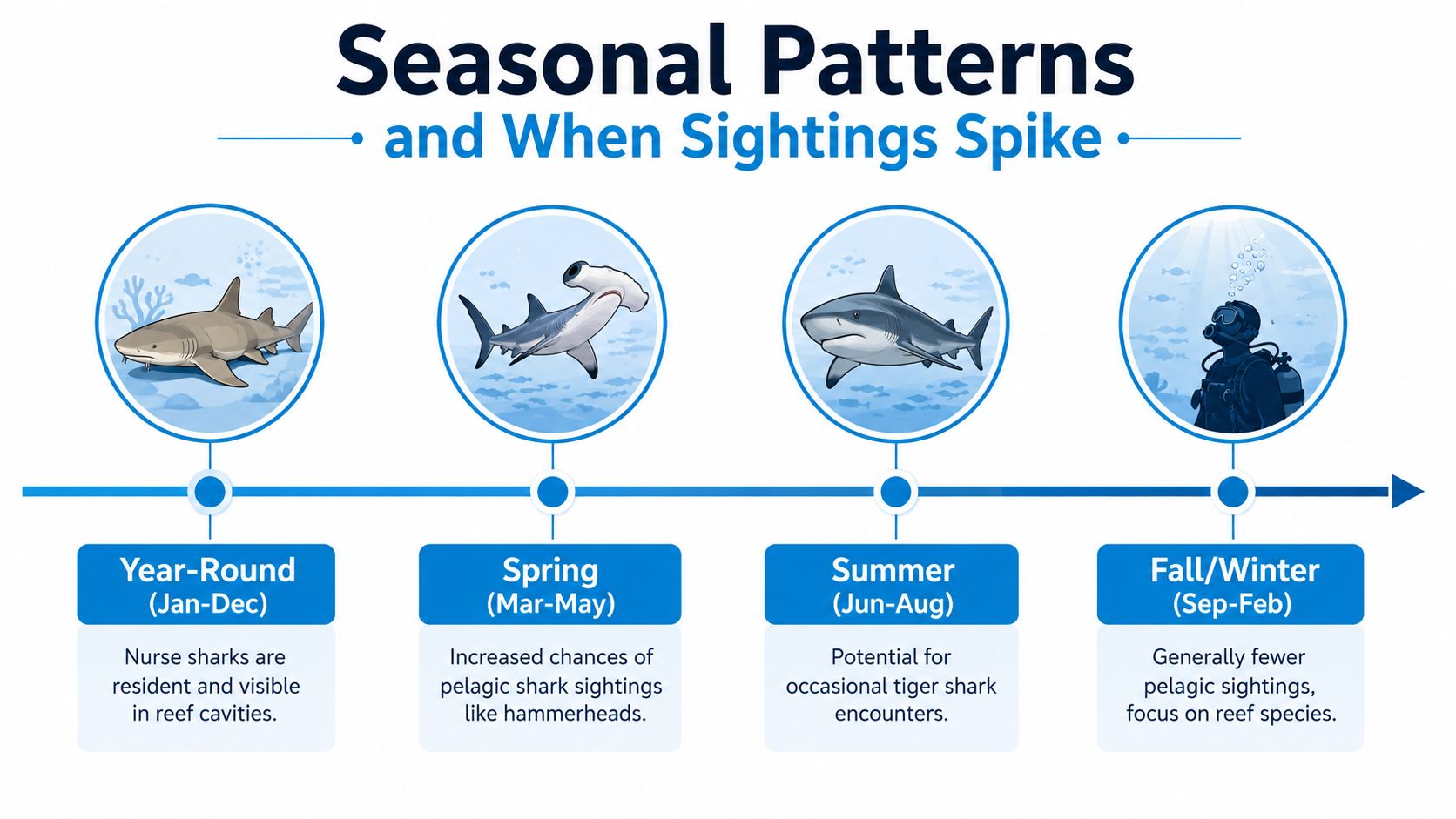
The cleanest seasonal rule is the simplest one. Nurse sharks are year-round residents, while the more mobile species cluster into narrower windows and more specific parts of the region. That means a summer trip can still deliver a great shark day, just not the same shark profile you'd plan for in winter.
Year-round resident behavior
Nurse sharks stay reliable because they're tied to reef cavities and shaded structure, not to dramatic seasonal migrations. If you're diving the marine park, that means your baseline shark expectation shouldn't change much from month to month. The animals are there, but the sighting still depends on the site, the guide, and whether the shark decides to stay in place long enough to be seen.
This is why Cozumel stays a good destination even when people obsess over “shark season.” You don't need a narrow calendar to have a realistic chance of a nurse shark. You need a good reef dive, a guide who knows where the cavities are, and enough patience to look into the shaded sections instead of scanning only the open water.
The winter pelagic window
The best seasonal window for larger pelagic shark encounters in the Cozumel region is November through March (cozuminfo.com). That's the period when bull sharks and the rare hammerhead sighting become more plausible near the island. Even then, those are probability bumps, not guarantees.
If you're planning a trip around shark sightings, use the season as a filter, not a promise. Summer still gives you warm-water reef diving and a realistic nurse shark chance. Winter increases the odds of a more dramatic sighting, especially if your operator is choosing deeper or more exposed sites.
A dive calendar helps, but it never replaces site selection. The reef decides more than the month does.
The infographic's four-node timeline is useful because it makes the hierarchy obvious. Year-round reef residents first, seasonal pelagics second, and everything else after that.
Safety, Risk, and Reading the Local Record Honestly
The honest question most visitors are really asking is simple. How risky are sharks in Cozumel? The answer has to start with the global context, because the local record makes more sense when you remember how rare unprovoked shark attacks are worldwide, with only about 60 to 80 occurring each year according to a summary citing the International Shark Attack File (MSN travel summary).
What the local record shows
Cozumel's documented incident history is small. One compiled regional database lists 16 shark incidents in Quintana Roo overall, including 3 incidents at Santa Rosa, Cozumel, and separate archives identify one confirmed fatal shark encounter in Cozumel in 1993 and another fatal event at Santa Rosa in 1997 involving two divers (sharkincidents.com Quintana Roo record). That's a limited record spread across only a few dates, not a pattern of constant danger.
The practical reading is straightforward. Shark incidents are historically rare relative to Cozumel's long-running dive traffic, and most day-to-day risk control comes from the dive team, not from the animals themselves. If you're snorkeling or diving with a guide who gives a tight briefing and keeps the group together, your exposure is already being managed in a sensible way.
What responsible briefings should cover
The useful safety talk is about behavior, not fear. It should cover how to stay off the reef, how to avoid crowding a resting shark, and what to do if an animal is near a ledge or cave opening. Good operators also explain where not to hover and when to keep moving so the animal has a clear path.
For a broader operational checklist, the scuba diving safety tips page is a good reminder of the basics a guest should expect before any shark-aware dive. That means concise site briefing, clear buddy separation rules, and a guide who doesn't improvise with wildlife.
Use the record. Cozumel isn't a place to worry about sharks as a routine hazard, but it's also not a place to be casual around a resting animal. Those are different things, and dive planning should reflect that difference.
Booking a Guided Shark-Aware Dive or Snorkel
The operator you choose shapes your shark experience more than your camera does. A competent Cozumel dive center won't promise a shark encounter on demand, but it will know which reefs give you the best odds, which season you're in, and how to brief a group so the dive stays relaxed and controlled.
What to look for before you book
Start with the basics, then ask better questions than “Will I see sharks?” A strong operator should be able to tell you whether your day is centered on reef walls, swim-throughs, shallow snorkeling, or deeper southern sites. They should also be clear about group size, entry style, surface intervals, and whether the trip is appropriate for certified divers, Discover Scuba participants, or snorkelers.
The trade-off is simple. Small, knowledgeable teams usually offer better site matching and calmer wildlife encounters, while generic sales language often hides a one-size-fits-all boat load. If you want a realistic shark-aware day, ask how the guide decides between Palancar, Columbia, Santa Rosa, or a shallower site when conditions change.
Matching the trip to the diver
Certified divers can use a two-tank reef day to stack the odds in their favor. First-timers should focus on supervision and comfort, not on species chasing. Snorkelers should expect clearer chances with reef life in shallow water, while divers who want more wall time can benefit from private or advanced training formats that keep them on deeper Cozumel terrain longer.
That's where a local shop with training options can help without overselling. Scuba Life Cozumel offers guided reef diving, Discover Scuba, snorkeling, and PADI training, so the trip format can match the guest instead of forcing everyone into the same plan.
Field rule: if the operator can't explain why a site was chosen today, they probably don't have enough local control to shape the shark outcome.
Logistics matter too. Resort pier pickup, maintained rental gear, onboard snacks, and clear timing all lower stress before the boat even leaves dock. Less friction on land usually means better attention underwater, which is where shark awareness happens.
Responsible Interaction and Conservation Etiquette
Shark etiquette in Cozumel is mostly about restraint. The animals are part of a protected marine park, and the way you behave around them affects both the encounter in front of you and the chances of seeing them again on future dives.
Do this, and don't do that
- Hold neutral buoyancy: Stay off the bottom and keep your fins away from coral so you don't kick up silt near a resting shark.
- Give exits space: Don't block a nurse shark's cave mouth or hover directly in front of a ledge it's using as shelter.
- Leave feeding out of it: Never feed, touch, or grab any shark, even if it seems calm and stationary.
- Keep light gentle: Use camera flashes sparingly near resting animals, especially in shaded cavities.
- Follow the guide's spacing call: If your guide signals more room, take it immediately and stay with the group.
That list sounds basic because it is. Most bad interactions start when a diver treats a resting animal like a subject in a photo studio instead of a wild fish that wants the option to leave.
Why the habits matter
Good behavior protects the reef as much as the shark. Cozumel operators who participate in stewardship and AWARE-style ocean protection aren't doing that for branding, they're doing it because reef health and wildlife consistency are tied together. When guests stay calm and leave the animal alone, the encounter stays natural, and that matters on a small island where the same sites get visited repeatedly.
The fastest way to become a better shark guest is to slow down. Use the reef structure, listen to the guide, and let the shark decide whether to stay or go.
Planning Your Trip Around Realistic Shark Expectations
If you want the clean planning version, use a simple ladder. Nurse sharks are the baseline, Caribbean reef sharks are a possible southern-wall bonus, bull sharks and hammerheads are winter possibilities, and whale sharks belong on a separate trip, not a Cozumel reef day. That hierarchy keeps your booking choices honest.
For travelers comparing island logistics with the mainland, it can also help to match your ideal Playa del Carmen trip before assuming every shark outing starts from the same dock. Cozumel and the mainland can both fit into a broader Riviera Maya plan, but they don't deliver the same shark experience.
A well-led Cozumel dive with a nurse shark under a ledge is already a real encounter, not a consolation prize. If you choose the right season, ask the right questions, and let the guide work the site instead of the marketing copy, you'll book the island for what it does well.
If you want help planning a Cozumel dive day around reef sites, shark likelihood, and the kind of supervision that keeps things calm, visit Scuba Life Cozumel. They run guided reef dives, snorkeling, Discover Scuba, and training that fit this topic directly, and their team can help you choose the right format for your experience level and expectations.