
The best Cozumel dives often start with a small decision on the boat. One morning the current looked stronger than expected at the first planned site, so we changed the drop and gave newer divers a calmer reef instead. The result was the same blue water, the same drifting flight over coral, and a much better dive.
Table of Contents
- Welcome to the Cozumel Blue
- Why Cozumel's Water Is So Incredibly Clear
- Navigating Cozumel's Seasons and Conditions
- Top Cozumel Dive Sites for Every Diver
- Your Dive Plan with Scuba Life Cozumel
- Essential Tips for Your Cozumel Dive
- Start Your Cozumel Diving Adventure
Welcome to the Cozumel Blue
You roll back, look up, and the boat is still visible above you in sharp detail. A few breaths later, the reef appears below as if someone turned the contrast all the way up. That's Cozumel at its best.
Warm water changes how people dive here. They relax faster, breathe slower, and stop wrestling the ocean once they realize the current is part of the experience, not the problem. Cozumel rewards divers who let the reef come to them.
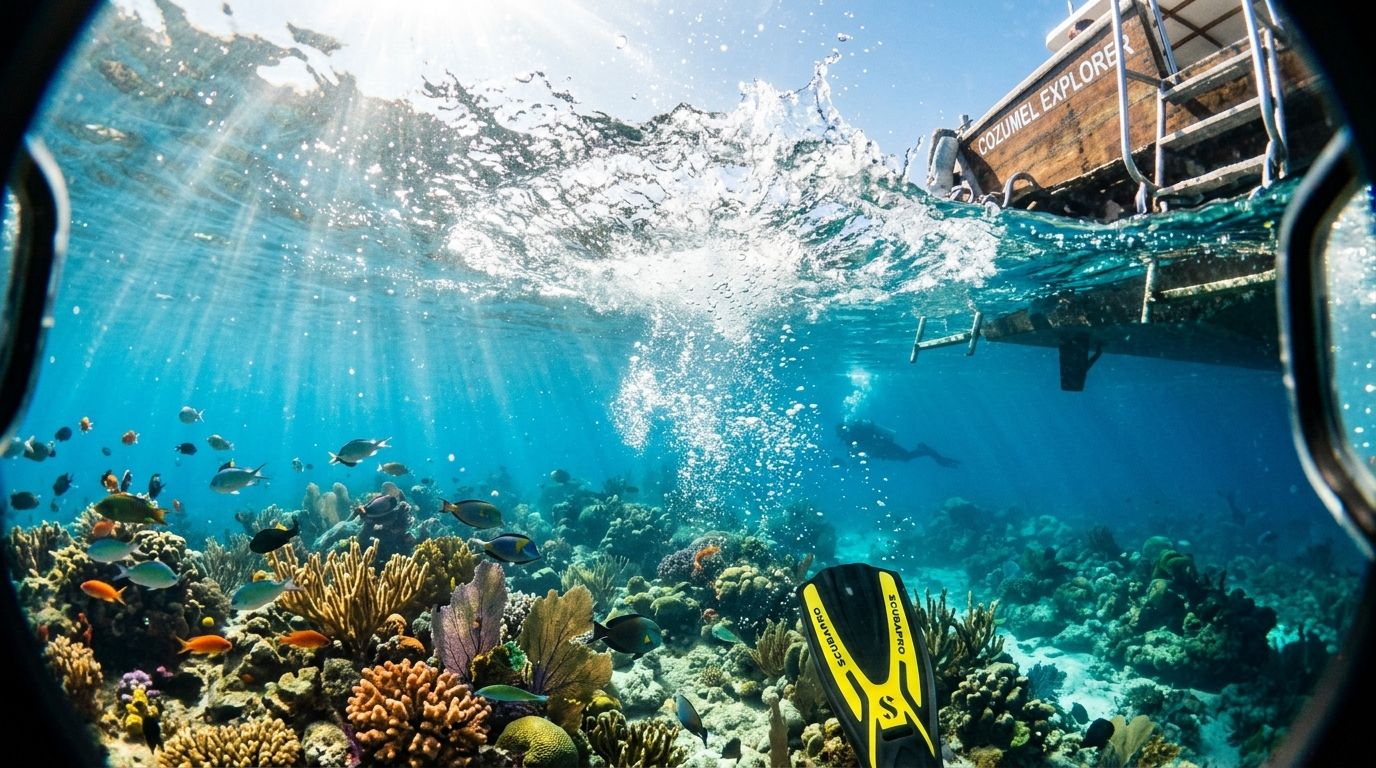
What makes a trip successful isn't just picking a famous reef. It's matching the site to the day's current, the visibility, and the diver's comfort level. That's the difference between checking a site off a list and having one of those dives you replay on the flight home.
What experienced divers pay attention to
A strong Cozumel diving guide isn't just about names like Palancar or Santa Rosa. It's about knowing when Palancar is the smooth, easy choice and when another reef will give you a cleaner drift, better marine life, or a safer profile for the group.
A local divemaster's playbook usually comes down to a few practical questions:
- Current first: If the current is too pushy for the least experienced diver on the boat, the site changes.
- Visibility next: Great visibility opens more options and makes navigation, spacing, and supervision easier.
- Depth profile: The same reef can feel very different depending on how deep the plan goes.
- Guest goals: Some divers want turtles and groupers. Others want a wall, swim-throughs, or their first relaxed drift dive.
Dive plans work best when the ocean gets the final vote.
That's how to think about Cozumel. Not as a fixed itinerary, but as a place where the right daily choice opens up the best of the reef.
Why Cozumel's Water Is So Incredibly Clear
On a good morning in Cozumel, you can drop in, level off, and see the reef line stretching far ahead instead of disappearing into haze. That kind of visibility changes the whole dive before anyone kicks a fin. It gives the guide more room to manage spacing, lets newer drift divers settle down faster, and makes site selection more flexible when conditions line up.
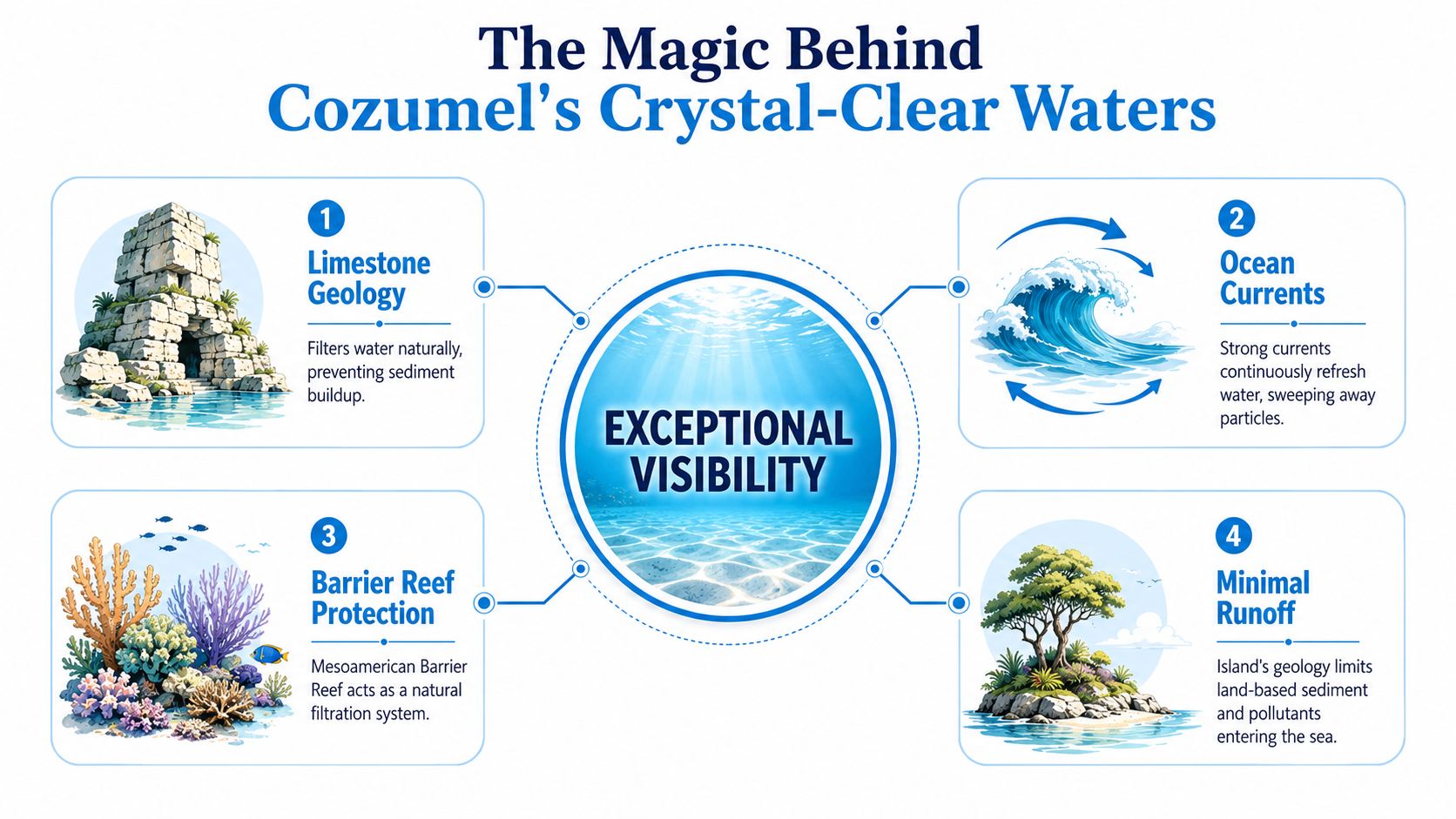
Cozumel gets that clarity from geography more than luck. The island has no rivers dumping sediment onto the reef, so heavy inland runoff is not part of the usual equation. It also sits in open-ocean water with steady exchange, which helps clear suspended particles instead of letting them hang over the reef all day. The Mesoamerican Barrier Reef adds another layer by slowing and trapping some particulates before they spread across the main dive zone.
What creates the clarity
The biggest reason is simple. Cozumel does not have the sediment load that clouds many tropical islands after rain.
On islands with rivers, a storm on land often means brown water offshore a day later. In Cozumel, that chain reaction is much weaker. Rain can still affect conditions, especially near shore and in certain seasons, but the island avoids the constant sediment feed that reduces visibility in other destinations.
Open water helps too. The west side dive sites are exposed to clean Caribbean water moving through the system on a regular basis. That flow is part of what gives Cozumel its famous drift dives, but it also keeps the water column cleaner than divers expect if they are used to bays, enclosed reefs, or river-fed coasts.
The reef structure matters in a practical way as well. Healthy coral formations, spur-and-groove sections, and wall topography help intercept and settle fine material. Clear water is not an accident here. It is the result of an island, current pattern, and reef system that work in your favor more often than not.
How clarity improves dive safety and experience
Visibility in Cozumel is not just a postcard feature. It is part of the operational plan.
On drift dives, good sightlines let the guide keep the whole group in view with less bunching and less chasing. That lowers the chances of small problems turning into bigger ones. A diver who drifts a little high, slows down, or misses a turn can be corrected early when everyone can still see each other clearly.
This is one reason experienced local operators do not choose sites by name alone. If visibility is wide open, more reefs stay on the table because supervision, navigation, and group control are easier. If the water looks flatter and shorter than expected, the smart move may be a reef with a simpler profile, clearer landmarks, or a current that lets the group stay tighter.
Good clarity also improves how the dive feels. Divers burn less attention on staying oriented and have more bandwidth for buoyancy, marine life, and reef awareness. You notice the eagle ray crossing out in the blue, the turtle tucked under a ledge, and the coral structure that makes each reef different.
That is the advantage. Clear water gives a local divemaster more options, and better options usually lead to a better dive.
Navigating Cozumel's Seasons and Conditions
Cozumel is diveable year-round, but the island doesn't look or behave exactly the same every month. The biggest mistake I see in trip planning is assuming every day offers the same visibility, current, and site choice.
Some guides flatten that reality too much. A better Cozumel diving guide has to acknowledge that season matters, especially if you're trying to stack multiple good dive days in a short vacation.
Dry season versus rainy season
The dry season usually gives divers the cleanest version of Cozumel. That's when the water often has that long blue range people expect from the island.
The rainy season needs a more flexible mindset. Seasonal guidance on Cozumel diving notes that from June to October, visibility can drop to 75+ feet, with currents ranging from gentle to strong. Afternoon showers can also affect how operators think about site selection and timing.
That doesn't mean the diving stops being good. It means the best site on one day may not be the best site on the next. In those months, divers usually get better results when the operator is willing to shift plans rather than force a famous site into a day that doesn't suit it.
A practical example is the choice to favor more predictable reefs when weather is unsettled and to skip more exposed options when seas build on the windward side. That's not being conservative for the sake of it. It's how you keep the experience smooth.
What local operators check every day
Good local operators don't pick sites once and forget them. They check conditions before departure, then reassess again once they're out on the reef.
That daily process usually includes:
- Wind direction: Wind changes surface comfort, boat runs, and how exposed certain areas feel.
- Tides and forecast tools: Many crews use tools such as Windy to track the pattern before leaving the dock.
- Live reef check: Once on site, they look at the actual current and visibility, not just the forecast.
- Diver fit: The final decision depends on who is on board, how recently they've dived, and what kind of dive they can handle calmly.
One of the smartest habits in Cozumel is simple. Before anyone jumps in, assess whether the current matches the least experienced diver in the group. If it doesn't, move.
Some of the best calls a divemaster makes in Cozumel happen before the first splash.
That approach also helps with multi-day guests. If someone dives several days in a row, the goal isn't just safety. It's variety. Operators who know the reefs well can rotate sites so guests get a new feel each day instead of repeating the same drift profile.
Top Cozumel Dive Sites for Every Diver
I have watched two boats tie up on the same morning, with the same visibility report, and come back talking about completely different dives. The difference was not luck. It was site selection. In Cozumel, the right reef is the one that fits the day's current, the sea state, and the divers on board.
That is why reef names alone do not tell you enough. A good operator treats site choice as a daily call, not a checklist. If you want a broader look at local reefs before you arrive, this guide to Cozumel dive sites is a useful planning reference.
Cozumel dive site quick guide
| Dive Site | Experience Level | Depth Range | Key Features |
|---|---|---|---|
| Palancar Gardens | Beginner to intermediate | 30 to 60 ft | Coral formations, swim-throughs, easy drifting |
| Santa Rosa Wall | Medium to advanced | 60 to 80 ft | Iconic wall, blue water, can feel more exposed in current |
| Yucab | All levels | Varies by plan | Marine life, relaxed reef profile, versatile pick |
| Paso del Cedral | Intermediate | 40 to 60 ft | Strong marine life encounters, shallow drift, photography appeal |
| Palancar Bricks | Intermediate | Varies by plan | Distinct coral architecture, classic Palancar feel |
| Punta Sur Reef | Advanced | Up to 100 ft at Cathedral, deeper profile through site features | Cathedral, Devil's Throat, stronger current, advanced navigation |
How to choose the right site for your level
Palancar Gardens is one of the safest recommendations for divers who want to enjoy Cozumel without feeling rushed by the drift. The reef gives you coral structure, clear reference points, and enough depth to feel like a real Caribbean wall-side dive without pushing newer divers too far. Palancar Gardens reef details describe it as a boat-accessible, drift-only dive in the marine park with a recommended depth range of 30 to 60 ft (9 to 18 m), visibility averaging 80 to 120 ft (24 to 36 m), and mild-to-moderate currents. For a checkout day, a refresher guest, or a mixed-experience group, that combination is hard to beat.
There is also a practical booking issue at Palancar. Palancar reef closure information notes that Palancar Gardens and Horseshoe close annually from April to May, while Palancar Caves and Bricks close from August to September under the marine park's rotating recovery schedule. Good trip planning means checking what is open now, not assuming every Palancar section is available.
Santa Rosa Wall is for divers who are comfortable in blue water and do not need the reef tight on their shoulder the whole time. The wall is beautiful, but it feels more exposed than a friendlier site like Yucab or Gardens when current starts to move. Local crews often save Santa Rosa for guests who already have good trim, calm descents, and enough experience to enjoy depth without task loading.
Yucab earns its place on a lot of smart itineraries because it works for almost everyone. It is a strong choice for families, mixed certification levels, underwater photographers, and divers coming back after time out of the water. You still get plenty to look at, but the reef profile usually gives the divemaster more flexibility to keep the group together and relaxed.
Paso del Cedral is a classic second-day pick for intermediate divers who want more life in the water column without committing to a deep or highly technical-feeling profile. It is known for productive fish life, good photo opportunities, and a drift that can feel lively without becoming stressful when conditions line up. That matters because this is the kind of site a local operator chooses carefully. If current is running harder than expected, the same shallow reef can feel much busier than it looks on paper.
Palancar Bricks suits divers who already know they enjoy the Palancar system and want more texture in the coral formations. The site has a stronger architectural feel than Gardens, with bigger structure and a little more personality to the terrain. It usually fits divers who are comfortable drifting and want something more interesting than an easy warm-up.
Punta Sur Reef is advanced diving. Deep Blue Cozumel's Punta Sur overview describes it as an advanced-diver site that includes the Cathedral section with a maximum depth of 100 ft (30 m) and Devils Throat, a complex cavern system that requires advanced navigation skills. Stronger current, deeper profiles, and overhead-style decision-making raise the stakes here. A disciplined operator only sends divers to Punta Sur when experience, gas management, and conditions all match the plan.
The pattern across all six sites is simple. The best reef for you is rarely the most famous one. It is the one your operator chooses that morning after looking at the sea, the current, and how you dive.
Your Dive Plan with Scuba Life Cozumel
The best Cozumel dive days usually start with a change.
I have seen plenty of guests arrive focused on one famous reef, then finish the trip talking about a different site entirely. That happens when the operator reads the sea accurately instead of forcing a preset schedule. At Scuba Life Cozumel, the plan is built around what the water is doing that morning, how the group dives, and what kind of underwater experience will feel good instead of rushed.
How the itinerary gets built
A solid plan starts before the boat leaves the dock. Certification matters, but it is only part of the picture. Recent dive history, air consumption, comfort in current, and personal goals matter just as much. A diver with an Advanced card who has not been underwater in two years needs a different first dive than a calm Open Water diver who logs local drift dives every month.
Then comes practical local judgment. Conditions on paper help, but they do not replace eyes on the water. Wind direction, chop, current strength, and how protected a site feels all shape the call. Good operators adjust. If the current is pushing harder than expected, they choose a reef where the group can stay together, settle in early, and enjoy the dive instead of spending it catching up.
That is the difference between a boat that sells reef names and a crew that runs the day well.
For multi-day trips, site order matters too. I prefer to build momentum. Start with dives that let people dial in weighting, buoyancy, and drift habits, then move into reefs with bigger walls, more exposed sections, or more technical profiles if the group is ready. That approach gives divers better photos, longer relaxed bottom time, and fewer avoidable mistakes.
Boat setup plays into that experience more than many visitors expect. A well-organized PADI dive boat in Cozumel makes entries cleaner, surface intervals calmer, and gear handling much easier, especially for divers doing several days back-to-back.
What the safety process looks like on the day
A proper briefing in Cozumel is specific. Divers need to know the current plan, expected depth range, descent procedure, spacing in the drift, and what happens if someone surfaces away from the group. Those details keep the dive calm.
The marine life plan matters too. On fishier reefs, the best encounters usually go to divers who stay quiet in the water and let the reef come to them. If you kick hard, drop onto the reef, or chase every turtle you see, the site feels busy fast. If you stay trimmed out and let the drift do the work, you see more with less effort.
Preparation starts with gear that fits the dive day. A simple checklist of must-have dive equipment helps prevent the usual boat mistakes, especially for visitors packing for warm-water drift diving.
Paso del Cedral is a good example of why the briefing matters. On a calm day, it can feel straightforward. With more current, the same reef demands better buoyancy, better awareness, and tighter group discipline. An experienced crew accounts for that before anyone rolls in, then adjusts the profile so divers can enjoy the turtles, nurse sharks, groupers, and schooling fish without turning the dive into a chase.
The safest drift dives look relaxed because the hard decisions were made before descent.
After the dive, the day is not over. Good crews debrief in practical terms. Air use, trim, weighting, comfort in current, and whether the next dive should be shallower, easier, or more ambitious. That feedback is how a decent first day turns into a much better second one.
Essential Tips for Your Cozumel Dive
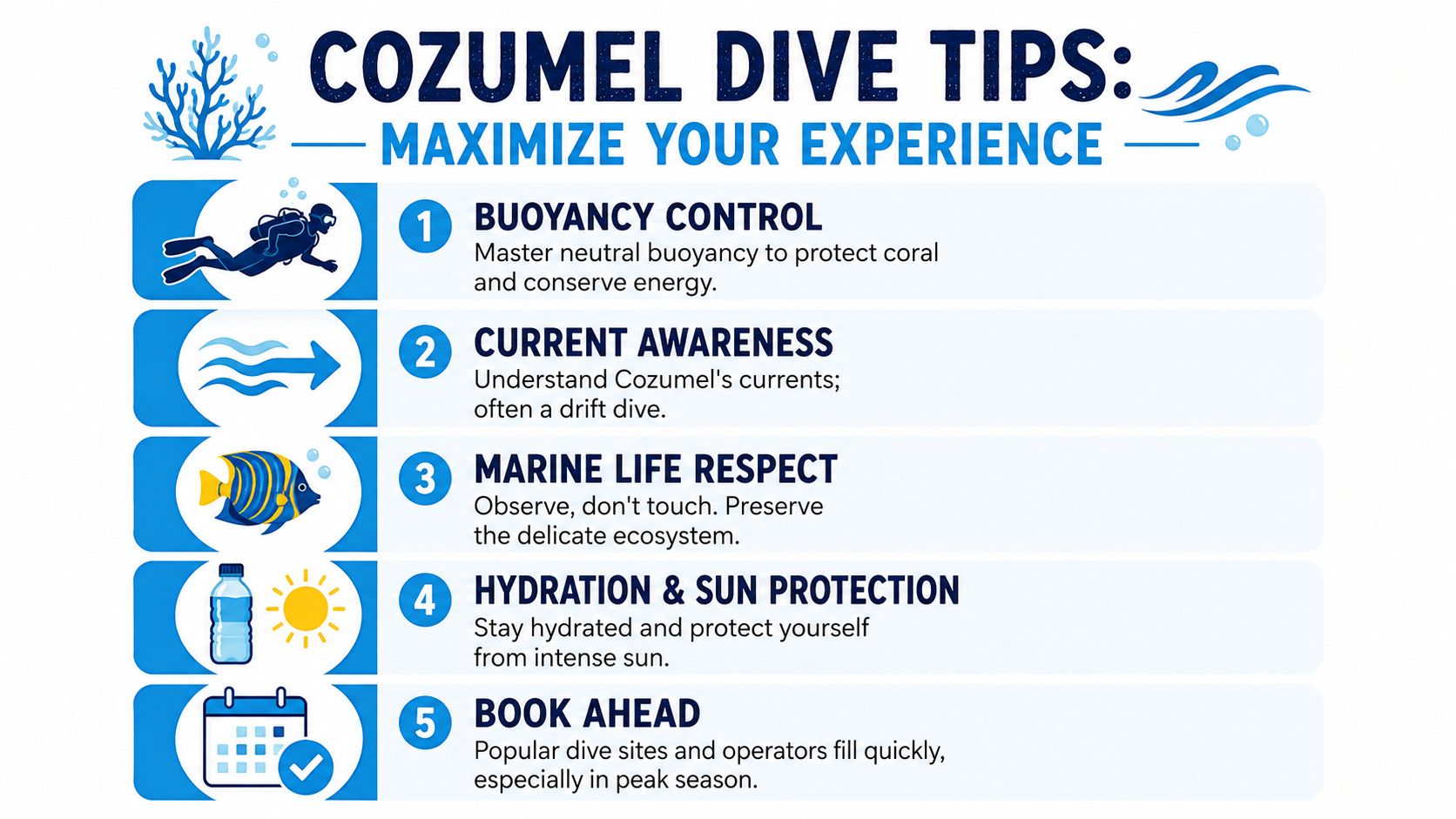
Small habits make a big difference in Cozumel. The island is forgiving in some ways, especially with warm water and generally easy entries, but it also exposes sloppy technique fast. If you fight the current, carry too much weight, or let your buoyancy drift, you'll spend the whole dive fixing avoidable problems.
Drift diving without fighting the water
The first rule is simple. Don't try to outswim Cozumel.
Instead, focus on trim, neutral buoyancy, and small adjustments. A diver who stays horizontal and efficient in the water will use less air and have a calmer dive than someone finning hard the whole time.
A few habits that work well here:
- Settle early: Use the first moments after descent to stabilize depth and breathing.
- Keep your profile clean: Tuck hoses, avoid wide fin kicks, and don't bicycle your legs.
- Watch the guide, not just the reef: In current, group position matters as much as personal comfort.
- Ascend smoothly: Drifts feel easy until the end gets rushed. Stay ahead of the ascent, not behind it.
For first-timers, a gear checklist helps reduce silly misses on the boat. A solid roundup of must-have dive equipment is worth reviewing before you pack, especially if you haven't traveled with scuba gear in a while.
This section of video gives a good feel for the environment divers come for in Cozumel.
Gear and photography choices that help
Cozumel's water temperature ranges from 75°F to 85°F (24°C to 29°C), and for a dive at 60 ft (18 m), enriched air nitrox can add 10 to 15 minutes of bottom time compared with air while staying within no-decompression limits, according to this Cozumel diving guide PDF. For divers doing two-tank boat days in the marine park, that extra flexibility can be useful.
A few gear choices usually pay off:
- Nitrox when available: Especially helpful if your dives tend to sit in that mid-depth range.
- Secure accessories: Clip everything tight. Currents punish dangling gear.
- Simple photo setup: Clear water helps, but complicated camera rigs can turn easy drifts into task loading.
- Good exposure choice: You don't need to overdress in Cozumel, but being slightly chilled by the second dive can still affect comfort and air use.
If you're carrying a camera, dive the reef first and the screen second.
For photography, wide scenes often beat close chase shots. The water clarity, reef contours, and blue background are part of the subject here. Stay off the coral, let marine life come into frame, and use the drift to compose instead of forcing the encounter.
Start Your Cozumel Diving Adventure
A strong Cozumel diving guide does more than name famous reefs. It helps you understand why the water is so clear, how the seasons change the experience, which sites fit your level, and why the best dive plans stay flexible until the boat reaches the reef.
That's the key to diving Cozumel well. Respect the current, choose sites that match the day's conditions, and dive with people who make careful decisions before the splash. If you're new to scuba or want to build skills before your trip, the PADI Open Water eLearning option is a practical way to arrive better prepared.
The island does the rest. Warm water, long visibility, healthy drift, and reefs that reward good technique are still what make Cozumel special.
If you're ready to turn this Cozumel diving guide into actual dive days, contact Scuba Life Cozumel to plan a trip that fits your experience level, whether you're booking guided reef dives, a first try scuba experience, or a full certification path.
Composed with Outrank tool