Bull shark diving in Mexico happens mainly off Playa del Carmen from November to March, with the most consistent sightings from December to February. Cozumel doesn't offer bull shark dives, so divers staying on the island travel roughly 70 km north to Playa del Carmen for the experience.
You may be looking at a Cozumel itinerary right now, picturing drift dives over colorful walls and wondering whether a bull shark encounter can fit into the same trip. It can, but not as a casual add-on from the island's usual dive boats. The experience is concentrated in one part of the Riviera Maya, tied to a narrow winter season, and shaped by deeper water, current, and strict underwater procedures.
That concentration is exactly what makes the dive distinctive. You aren't chasing sharks across a reef or swimming freely toward them. You descend with a trained group, settle into a controlled observation position, and let the animals decide how close they pass. With the right timing and honest assessment of your skills, bull shark diving in Mexico is a calm, disciplined wildlife encounter, not a reckless adrenaline exercise.
Table of Contents
- Why Most Divers Start Their Search in Cozumel
- Understanding Bull Sharks and Why Mexico Is a Special Case
- Where Bull Sharks Are Actually Encountered in Mexico
- What the Bull Shark Dive Feels Like
- Certification, Gear, and Skill You Need Before Booking
- How to Choose a Reputable Bull Shark Operator
- Safety, Regulations, and the 2026 Protection Effort
- Planning Your Trip and Setting Realistic Expectations
Why Most Divers Start Their Search in Cozumel
Cozumel is a natural starting point because it's one of Mexico's most established dive bases. Visitors know the island for current-assisted reef dives, steep walls, swim-throughs, and boat trips across the marine park. That reputation creates a common planning mistake: assuming every major Caribbean dive attraction is available from Cozumel.
It isn't. Bull shark dives aren't offered locally from Cozumel. The reliable Riviera Maya experience takes place off Playa del Carmen, about 70 km north of Cozumel, so an island-based diver needs to arrange transportation across the channel and then continue to the Playa del Carmen departure point. This is a separate excursion, not a site reached by asking a Cozumel captain to alter the morning route.
Why the sharks gather elsewhere
Cozumel's famous reef diving and Playa del Carmen's bull shark sites serve different ecological purposes. Cozumel's attraction is its current-swept reef structure, while the bull shark encounter is associated with a specific seasonal aggregation near Playa del Carmen. The animals aren't distributed evenly along the coast, and a shark's presence in the wider Caribbean doesn't mean it will appear at an island reef on demand.
The Riviera Maya pattern is linked to pregnant females using the area seasonally as a resting zone. That makes location and calendar more important than the general fact that bull sharks inhabit warm coastal waters.
Planning rule: Book the shark dive around Playa del Carmen's departure schedule first, then fit your Cozumel reef days around it.
How to combine both destinations
Treat the shark excursion as a dedicated travel day. Confirm the ferry, ground transfer, check-in time, and return plan before paying a deposit. Weather, boat schedules, and cross-channel logistics can all affect how much flexibility you have, so avoid placing the shark dive immediately before an important flight.
Cozumel-based divers who need training should also separate certification planning from shark-dive planning. A beginner course such as PADI Open Water Diver – Private Training – Digital Manual Included is a training option, but an open-water course alone doesn't automatically make a diver ready for a deeper, current-affected wildlife encounter. Build comfort and control first, then discuss the shark dive with the operator.
Understanding Bull Sharks and Why Mexico Is a Special Case
Bull sharks are powerful coastal predators adapted to warm, shallow, and brackish water. They can use areas influenced by rivers, estuaries, and coastal shelves, so their habitat is not limited to clear offshore reefs. That flexibility helps explain why Mexico offers particular encounters in coastal zones rather than at every Caribbean reef.
The Playa del Carmen aggregation follows a narrower biological pattern. Pregnant females typically arrive around November and remain until February or March, according to reporting on the local activity and its seasonal development (X-Ray Mag's report on bull sharks in Playa del Carmen). Independent diving guidance describes the Riviera Maya window as November through March, with the most consistent encounters from December to February and water commonly around 26–28°C (MexiDivers' seasonal guide).
The encounter is defined by timing and location rather than pursuit. The females appear to use the area as a seasonal gestational resting zone, which gives the dive unusual predictability in winter and limited reliability outside that period. Once the aggregation shifts, sightings can fall sharply, even though bull sharks remain present elsewhere in Mexico and the wider region.
A successful bull shark dive depends on meeting a specific animal in a specific place during a specific seasonal window.
Why the season matters to divers
The calendar affects more than the chance of seeing a shark. It influences whether operators run the specialized trip, how many departures they offer, and whether your travel dates align with the behavior that brings the animals near the site. A diver arriving outside the established window may still find excellent reef or cenote diving, but should not assume that the bull shark trip operates with the same consistency.
The underwater setting also changes how the animals are observed. Divers are not following sharks across a large open-water route. They descend to a known seasonal site, settle into the planned group position, and watch while guides manage the descent, spacing, and diver behavior. The experience is closer to sitting beside a wildlife observation point than pursuing an animal through the sea.
That predictability can support conservation when operators handle the activity carefully. Local dive tourism developed into a recognized ecotourism activity around 2007, and independent reporting estimated that it generated about US$1 million annually for the Playa del Carmen economy through direct and indirect dive-tourism spending (X-Ray Mag's reporting). This economic connection gives operators and local authorities a reason to protect the animals and the conditions that bring visitors. It also requires limits, so a concentrated seasonal activity does not become an uncontrolled wildlife attraction.
Where Bull Sharks Are Actually Encountered in Mexico
For practical planning, two Mexican destinations matter most: Playa del Carmen in the Riviera Maya and Cabo Pulmo on the Pacific coast. They shouldn't be treated as interchangeable versions of the same dive.
Playa del Carmen offers the clearest fit for a Cozumel-based Caribbean itinerary. Its bull shark activity is strongly seasonal, with the established window from November to March and the most reliable encounters in mid-winter. Guides describe the shark dive at approximately 20–27 meters, often over a sandy bottom, with a second reef dive commonly included in the day (Seth Dive's Playa del Carmen guide).
Cabo Pulmo is the technical contrast. Scientific work there tracked 32 bull sharks using passive acoustic telemetry and recorded a mean residence index of 0.365. The research described residence mainly from November to July, with detections dropping to nearly zero in August and October, and documented movements as far as 161 km north to Isla Ballena and 147 km to Punta Lobos (ScienceDirect's bull shark reference).
Bull Shark Diving Destinations in Mexico at a Glance
| Region | Season | Depth | Access from Cozumel | Best for |
|---|---|---|---|---|
| Playa del Carmen, Riviera Maya | November to March, strongest from December to February | About 20–27 meters | Roughly 70 km north, requiring cross-channel and ground travel | Cozumel visitors seeking a seasonal Caribbean encounter |
| Cabo Pulmo, Pacific coast | Year-round presence reported, with a cooler-month peak roughly from December to May | Site-dependent | A much longer Pacific-side journey | Divers planning around the marine reserve and resident shark ecology |
Cabo Pulmo also differs because the El Vencedor wreck is described by some operators as a cleaning station that can concentrate several sharks during a dive (Book Dive Boat's Mexico guide). That means thermoclines, visibility, site conditions, and reserve logistics matter alongside the calendar.
If you're staying on Cozumel, Playa del Carmen is the practical choice. The island's own shark information and local reef context are summarized in this guide to sharks in Cozumel, but that should not be read as evidence that the seasonal Playa del Carmen bull shark dive is available on Cozumel itself.
What the Bull Shark Dive Feels Like
The boat briefing sets expectations before anyone enters the water. A professional guide explains the descent, planned depth, current management, group positioning, hand signals, and the response if a shark approaches. The structure matters because divers observe within a defined plan, rather than improvising around a large predator. Clear rules protect both the group and the animals.
In Playa del Carmen, the shark portion is usually conducted at about 20–27 meters, and currents may be strong, according to Seth Dive's practical guide. At that depth, your attention has several jobs at once: maintain buoyancy, breathe steadily, monitor depth and gas, and stay aligned with the group while watching the sharks.
A calm descent and a short encounter
After descending, divers generally hold a controlled position instead of swimming after the animals. Depending on the site and briefing, you may remain near the bottom or use an agreed reference point while the guide arranges the group. The sharks move through the viewing area. Your task is to watch without reaching, chasing, or making sudden movements.
A typical moment is simple. A shark enters your peripheral vision and crosses in front of the group. You keep your hands close, maintain neutral buoyancy, and resist finning toward it for a closer photograph. It passes, the guide gives a signal, and observation continues.
The memorable skill is stillness. Your instincts may urge you to follow, but remaining in place gives the animal control of the interaction.
The best shark diver isn't the one who gets closest. It's the one who stays composed, maintains position, and lets the animal control the interaction.
The shark segment occupies only part of the day. Operators commonly pair it with a second reef dive, which provides a different pace after the specialized encounter. The follow-up may feel easier because the focus returns to reef navigation, marine life, and ordinary buddy awareness.
A calm shark does not make this an introductory activity. The listing 2 PM – Discover Scuba Diving – 2 Boat Dives describes a separate beginner format. It does not indicate that a first-time diver is prepared for a deep dive affected by current.
Certification, Gear, and Skill You Need Before Booking
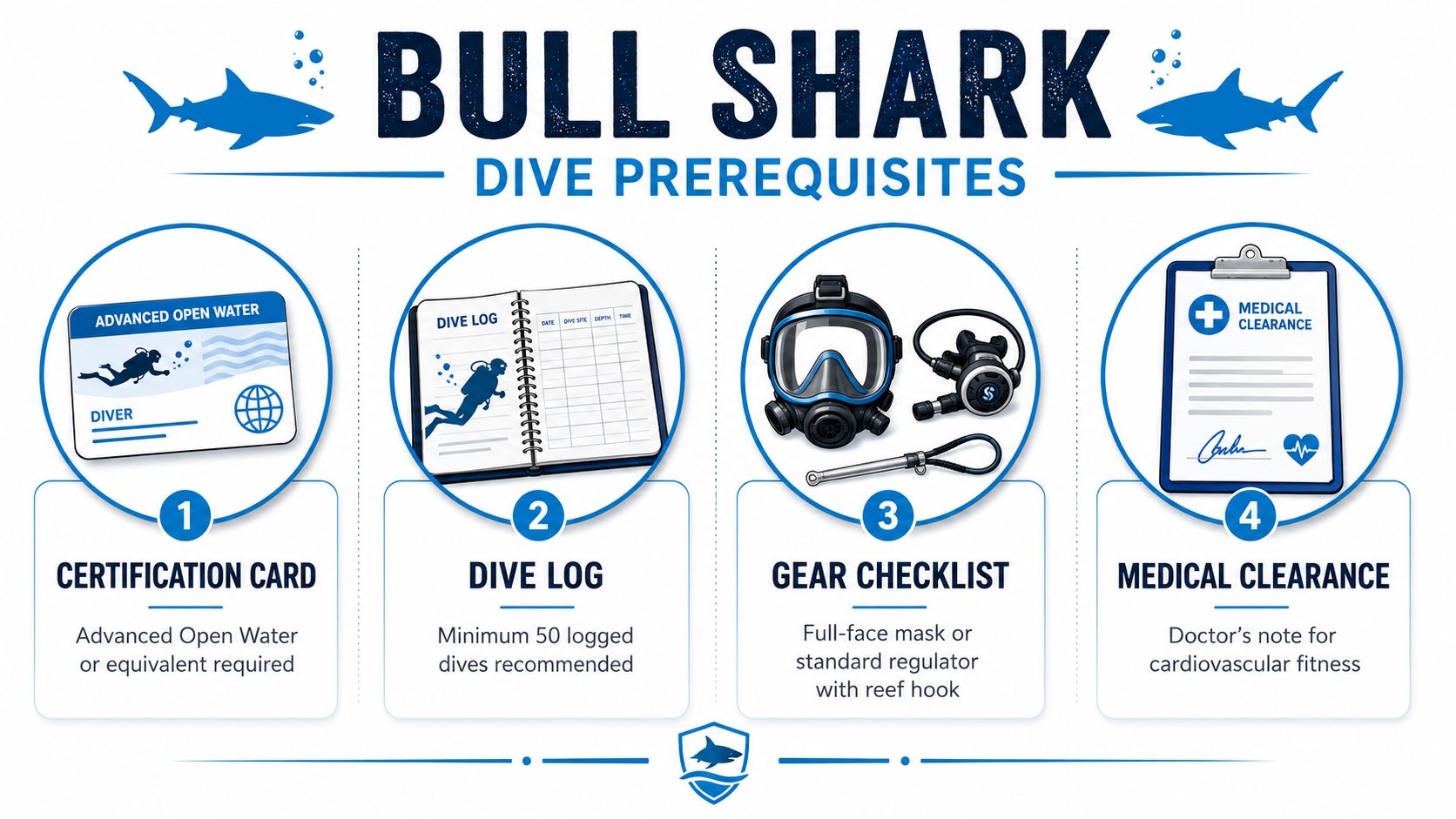
Certification cards matter, but they don't tell the whole story. Operators commonly expect Advanced Open Water certification or equivalent experience for the Playa del Carmen dive because the encounter takes place at depth and may involve strong current (Seth Dive's guide). A diver with fewer recent dives but excellent control may be a better fit than someone with a larger logbook who hasn't been underwater in a long time.
The true test is whether you can perform routine tasks without losing position. You should be comfortable with controlled descents, neutral buoyancy, regulator recovery, mask management, air monitoring, and a calm response to changing depth or current. You also need to recognize when anxiety is affecting breathing and tell the guide before entering the water.
A practical readiness check
Use this checklist before booking:
- Depth comfort: You can remain calm and task-focused at the planned depth.
- Buoyancy control: You can hold a stable position without repeatedly finning or rising.
- Current awareness: You know how to respond to flow without fighting it blindly.
- Recent practice: Your recent dives reflect your current ability, not just your historical experience.
- Medical honesty: You've addressed relevant health concerns with a qualified medical professional and completed any clearance an operator requests.
Standard recreational equipment is generally the starting point. Expect a BCD, regulator, mask, fins, exposure protection suited to water around 26–28°C, and a functioning dive computer. Some divers prefer a full suit for comfort during deeper or longer portions of the day, but your operator should confirm the actual equipment list.
Keep topside items secured. If you're carrying cameras, documents, or dry clothing during transfers, review full dry bag sizing and sealing advice before relying on a bag around boats and spray. For divers still building foundational skills, PADI Open Water eLearning can support course preparation, but it doesn't replace in-water training or the experience required for this particular dive.
How to Choose a Reputable Bull Shark Operator
Start with the briefing, not the photograph gallery. A serious operator should explain what happens underwater in concrete terms, including the descent profile, expected depth, current, diver spacing, shark conduct rules, and the response to an uncomfortable or abnormal situation.
Ask direct questions before booking:
- What certification is expected? Look for a clear answer about Advanced Open Water or equivalent experience.
- How is the group positioned? The guide should describe a controlled observation setup rather than free swimming.
- What happens after the shark dive? Many trips structure the day around the shark encounter followed by a second reef dive.
- What are the cancellation rules? Weather and sea conditions can affect departures, so understand the policy before paying.
- What conduct is prohibited? Touching, chasing, provoking, or obstructing the animals should never be treated as acceptable entertainment.
A reputable team won't promise that a wild animal will perform on command. It should explain the seasonal nature of the encounter and tell you what happens if conditions aren't suitable. Responsible operators also make it easy to ask about conservation practices, group management, and whether the site uses fixed lines or another controlled descent method.
What the price represents
Independent guides commonly place Playa del Carmen bull shark trips around 2,800–3,200 MXN, with the final amount shaped by access control, boat logistics, equipment, guide service, and the second dive (Seth Dive's cost and expectations guide). Treat that range as planning context, not a universal rate. Operators may structure inclusions differently, and the lowest quote may leave out transfers, equipment, park charges, or other practical costs.
For Cozumel visitors, operator selection also includes geography. A Cozumel-based center may help with reef diving on the island, but you should verify whether it arranges the Playa del Carmen shark excursion or only offers local dives. The Cozumel dive shop guide can help you evaluate local services, while the shark operator should answer the cross-channel logistics separately.
Safety, Regulations, and the 2026 Protection Effort
Bull shark diving combines wildlife tourism with conservation, so the briefing focuses on predictable behavior and controlled observation. Divers remain in position, follow guide signals, and leave the sharks room to move naturally. Guides should also be prepared to cancel or adjust a dive when weather, visibility, current, or animal behavior makes responsible viewing impractical.
The rules underwater are direct. Do not touch the sharks, reach toward them, chase them, block their path, or ignore instructions for a photograph. A calm, stationary posture limits sudden movement and helps the group operate as one coordinated unit. The experience is closer to watching wildlife from a hide than pursuing an animal through open water.
Playa del Carmen has entered a wider discussion about destination-specific protection. A 2026 proposal sought geographical protection for the activity under the name “Tiburón Toro de Playa del Carmen, Quintana Roo,” according to reporting on the proposal (Shark Diving's coverage of the geographical protection effort). The proposal should not be treated as a confirmed account of final rules. Travelers should verify whether access, pricing, operator standards, or conservation duties have changed before relying on older information.
What formal protection could mean
If authorities formalize the designation, the practical effects may include clearer site boundaries, stronger operator requirements, more structured access, and defined expectations for wildlife interaction. Such measures could also clarify that this is a concentrated, seasonal activity rather than a generic shark product available all along the coast. Results would depend on implementation, monitoring, and operator compliance.
The timing matters because the activity is highly localized. A named designation could help protect the seasonal conditions that support the tourism product, while tighter scheduling and controlled access may become part of the experience. For wildlife encounters, predictability and restraint often signal better outcomes than spontaneity and spectacle. Divers may need to accept less flexibility in exchange for clearer management of the site.
Before booking in 2026, ask which rules currently apply, whether the departure point or access procedure has changed, and how the business supports non-contact observation. An operator should answer plainly, especially while the protection effort remains under development. Fresh operational details matter more than outdated marketing language.
Planning Your Trip and Setting Realistic Expectations
Start with your travel base. If you're staying in Cozumel, reserve local reef days for the island and treat Playa del Carmen as a separate excursion requiring roughly 70 km of travel north plus cross-channel and ground logistics. Build enough margin around the trip that a delay won't jeopardize a flight or force you to rush through the dive briefing.
For the Riviera Maya, the documented season runs from November through March, with December through February offering the strongest encounter consistency (MexiDivers' season guide). The edges of the season can work, but they carry more uncertainty than the middle. If this is the main reason you're traveling and your schedule is limited, prioritize the peak rather than assuming every winter date offers the same experience.
Cabo Pulmo deserves consideration only when your wider itinerary already points toward Mexico's Pacific side. Scientific monitoring there shows a different residency pattern from Playa del Carmen, while local operators describe year-round animals and cooler-month peaks. It isn't a convenient substitute for a Cozumel holiday, but it may suit a diver specifically interested in reserve ecology, changing visibility, and a more resident-style encounter.
Your final booking checklist
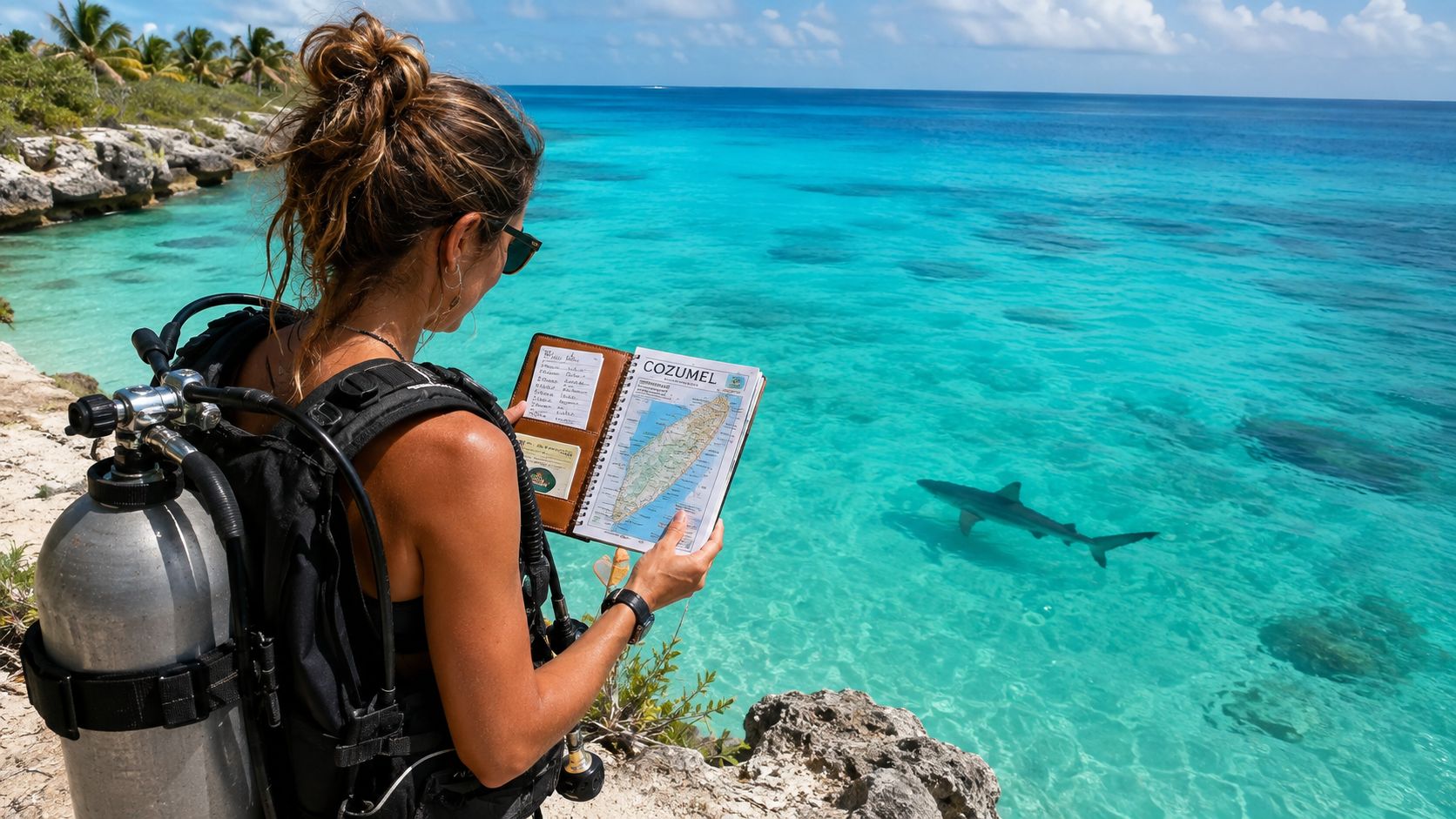
Confirm the operator's certification expectations, planned depth, current conditions, inclusions, departure time, transfer arrangements, and cancellation policy. Ask how the guide manages diver position and what behavior is prohibited. If you're comparing hotels or planning a multi-stop stay, virtual tours for Mexico hotels can help you inspect accommodation options before committing, especially when the shark excursion adds an extra travel day.
The most accurate way to frame bull shark diving in Mexico is simple. It's a seasonal, destination-specific observation dive that rewards buoyancy, patience, and careful scheduling. Cozumel divers can include it in a broader trip, but they should travel to Playa del Carmen with realistic expectations rather than expecting bull sharks on the island's regular drift reefs.
Scuba Life Cozumel offers guided scuba diving, snorkeling, private boat outings, and PADI training on Cozumel's reefs for certified divers and newcomers. Visit Scuba Life Cozumel to plan your island diving and discuss how a carefully scheduled Playa del Carmen bull shark excursion could fit alongside it.