
You're probably trying to line up a flight, a ferry, and a dive boat without turning day one into a logistics mess. That's the challenge of how to get to Cozumel, especially if you're hauling a camera rig, a gear bag, or a group that can't afford a missed connection. The island is easy to reach once you understand the route, but it punishes loose timing.
Table of Contents
- Mapping Your Route to Cozumel from Major Origins
- Comparing Ferry Operators and Crossing Options
- Navigating the Playa Del Carmen Ferry Terminal
- Planning Around Weather and Sea Conditions
- Flying Direct to Cozumel International Airport
- Timing Your Arrival for Dive and Snorkel Schedules
Mapping Your Route to Cozumel from Major Origins
If your trip starts at Cancún International Airport, the usual route is still the one most divers and snorkelers use, because Cozumel is an island and there is no direct drive from the mainland. The chain is straightforward on paper. In practice, it has three separate steps, ground transfer, terminal wait, and water crossing. That last stretch decides whether you catch an afternoon boat or spend the day watching ferries come and go.
From a logistics standpoint, Cancún to Playa del Carmen, then ferry to Cozumel is the mainland route that matters most. A published travel guide says the ferry crossing takes about 45 minutes and notes that Mexico WaterJets runs 4 departures per day while UltraMar operates almost every hour from 7 a.m. to 11 p.m. (AAA travel guide). Another route guide puts the full airport-to-island journey at roughly 2 hours once waiting is included, which matches what I see in real trip planning. The transfer is rarely the problem. The handoff is where timing breaks down (MX Travel guide).
What the mainland route looks like
From Cancún airport, the land leg usually comes down to ADO bus, private shuttle, or taxi. The bus is the cleanest choice if your schedule can absorb a delay, while a private shuttle gives you more control when you are trying to line up a ferry window. Taxis are useful when you are pressed for time, but they make less sense once you are moving heavy dive bags, a camera case, and checked luggage through the terminal.
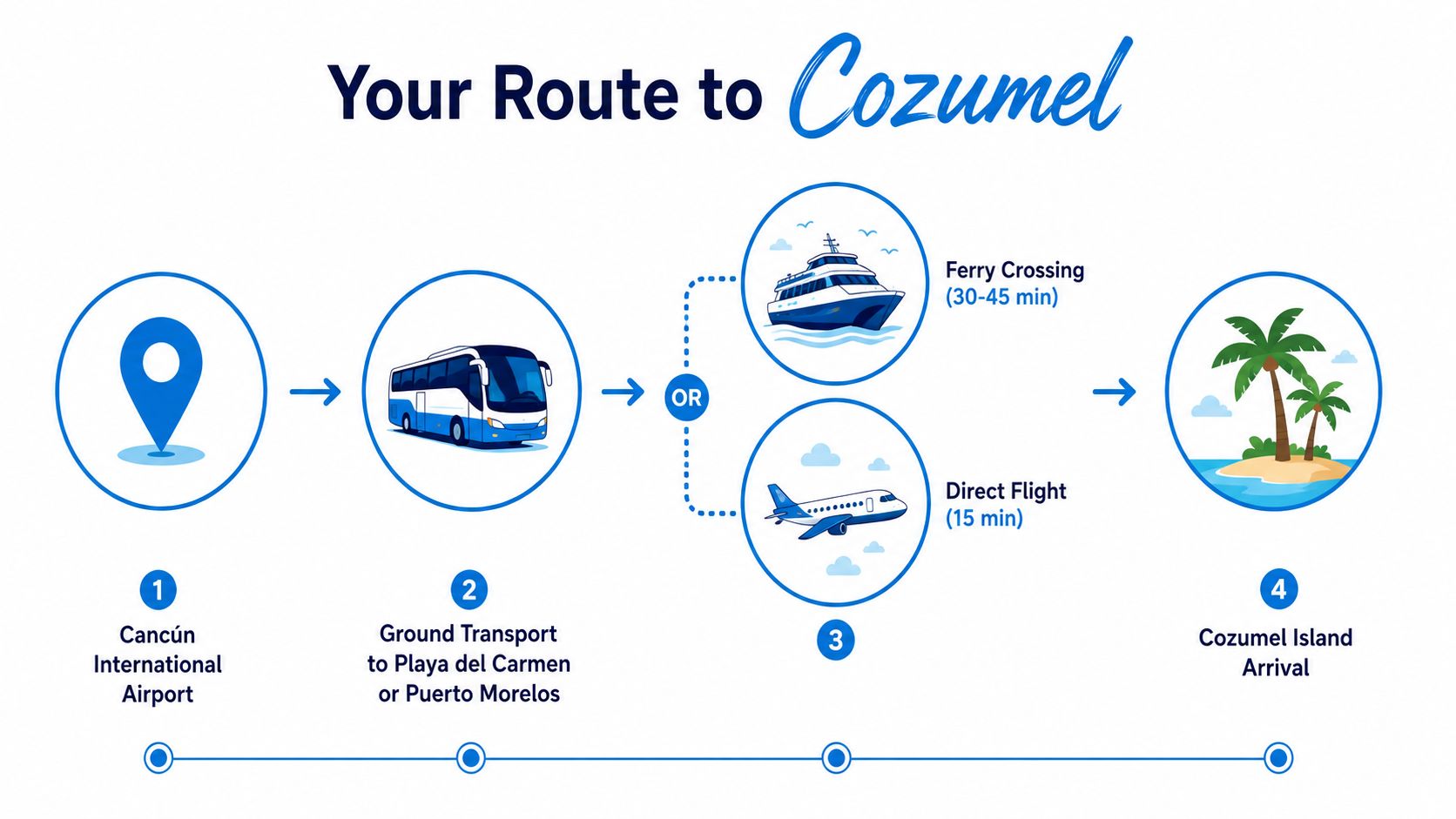
Tulum and Akumal follow the same basic pattern. Get to Playa del Carmen, then board the ferry. If you are coming from the cruise area or another mainland stop, the constraint is the same, the island leg is by boat or plane. Cozumel's small airport sits about 1.7 km from the city center, so once you reach the island, the last transfer is short and simple (AAA travel guide). For anyone heading to the San Miguel fiscal pier, the practical detail is location, not distance. Check the Cozumel dive center locations before you commit to a transfer, because a few minutes saved on the mainland can disappear fast once you start moving gear between pier, hotel, and shop.
Practical rule: if your arrival time and the ferry schedule do not match, you do not have a transport plan yet.
Comparing Ferry Operators and Crossing Options
The Playa del Carmen route is usually a choice between UltraMar and Mexico WaterJets, and the better option depends on whether your priority is timing flexibility or a simpler, more predictable handoff. Divers should care about that difference more than they usually do, because the wrong ferry window can push a full dive day out of sync before you even reach Cozumel.
UltraMar is easier to build around if you are coming from the airport or arriving on a shuttle that might run a little late. Its departures give you more room to recover from baggage delays, traffic, or a slow transfer from Cancun. Mexico WaterJets can work well when you already know your arrival time in Playa del Carmen, but fewer departures leave less margin if your flight lands late or your bags take longer to show up. A guide that tracks ferry logistics says both major operators run in the 1.5 to 2 hour cadence during the day, with service concentrated roughly 8 a.m. to 10 p.m. (Cozumel Connection).
How to choose between UltraMar and Mexico WaterJets
The right ferry is the one that gives your arrival room to breathe. Leave space for a delayed shuttle, a slow luggage line, and the walk from the curb to the pier, because each of those steps can eat into the window you thought you had. If you are carrying a roller bag, a regulator case, and maybe a camera housing, a little extra time matters more than a polished ticket counter or a brand name you recognize.
| Feature | UltraMar | Mexico WaterJets |
|---|---|---|
| Frequency | Almost every hour in the long operating window, according to a travel guide | 4 departures per day according to a travel guide |
| Best fit | Travelers who need flexibility and are timing a mainland arrival | Travelers who already know their arrival window |
| Planning style | Easier for same-day connections | Better if your schedule is locked in |
| Main trade-off | More departures make recovery from delays simpler | Fewer departures can mean a longer wait if you miss one |
The downtown San Miguel fiscal pier matters too, because it handles a large share of mainland traffic and puts you closer to central town than a pier far from your hotel. Verified access data says 46.5% of the 8.3 million people transported between the island and mainland in 2023 used that pier, which helps explain why it feels busy and efficient at the same time (This Is Cozumel flight numbers). If your dive shop or hotel is north of town, the walk and taxi time from your arrival pier can still change your day.
Navigating the Playa Del Carmen Ferry Terminal
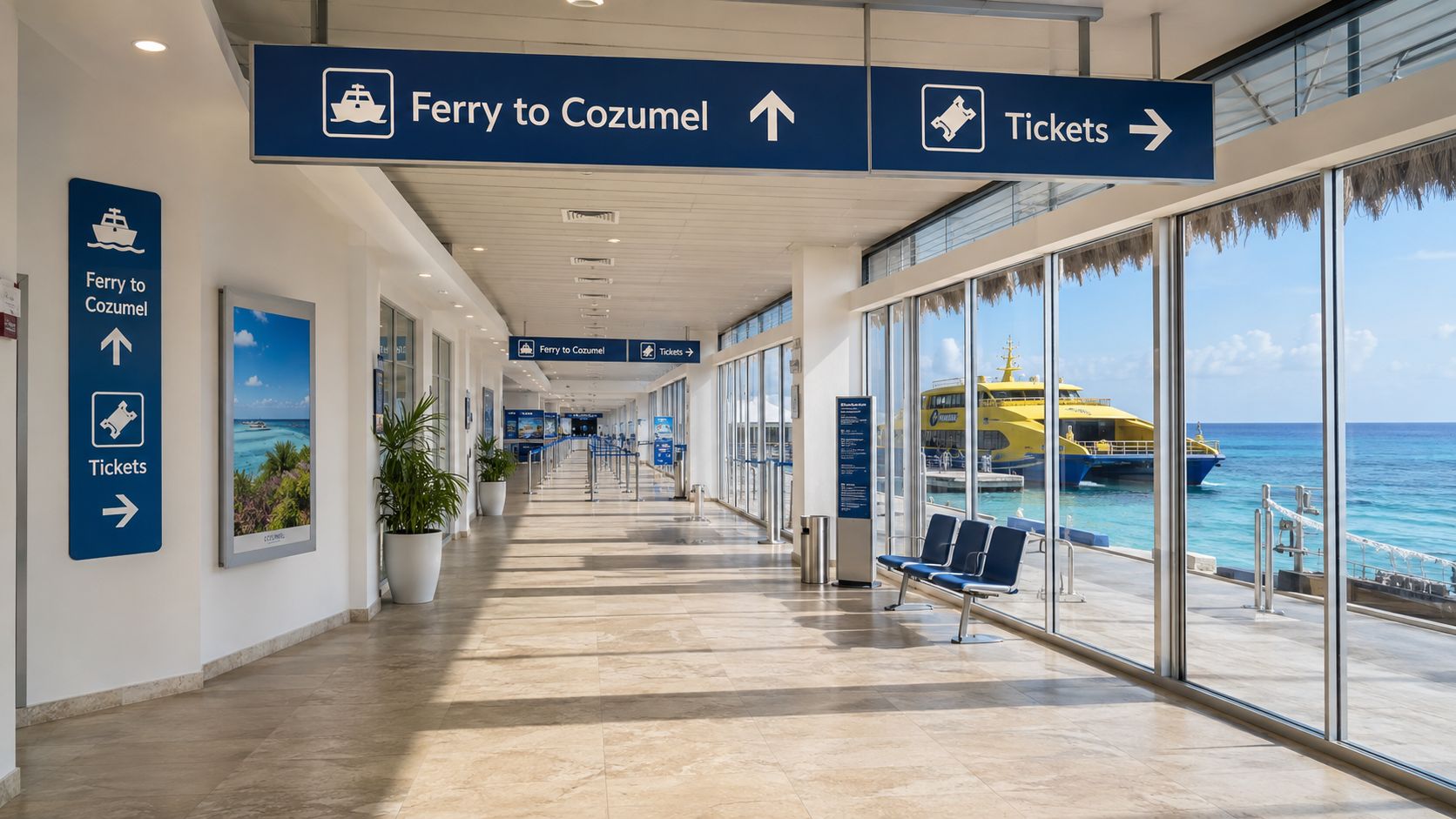
The Playa del Carmen handoff looks trivial until you're standing there with wet bags, passport documents, and a watch that says your boat should already be boarding. The terminal is close to the bus infrastructure, but “close” still means you need to manage baggage, ticketing, and a little patience. That's why I tell divers to treat Playa as a transfer point, not as a sightseeing stop.
Build a buffer before you ever see the pier
The safest habit is to arrive at the ferry terminal at least 30 minutes before departure, which gives you room for tickets, security, and boarding. That buffer isn't overcautious, it's what keeps a normal delay from becoming a missed boat. If you're carrying dive gear, add more time, because regulator cases, camera housings, and a rolling suitcase don't move like a backpack.
Ticketing is usually straightforward, but the decision between buying at the window and arriving with a plan matters more during busy periods. Peak season crowds can make the terminal feel compressed, and the last thing you want is to be sorting out payment while your group is already in the boarding line. For a same-day dive, I'd rather see you arrive early and bored than early and panicked.
A traveler heading to a 2 PM – Discover Scuba Diving – 2 Boat Dives style itinerary needs that logic even more, because the afternoon margin disappears fast if the ferry slips. That's why I always advise keeping boarding documents and a small snack accessible, and stowing the rest so you're not repacking on the sidewalk.
Handle luggage like a dive traveler, not a vacationer
Keep your essential items together, passport, meds, dive computer, prescription mask, and anything fragile you can't replace easily. Checked bags can wait, but the few things you need for the first boat should stay with you. If the ferry is crowded, it's easier to protect gear that's already organized than to rescue it from a mixed pile at the pier.
A quick bite before boarding helps too, because dive days go better when you're not hungry before the boat even leaves. I've watched too many travelers skip lunch, then feel lightheaded halfway through a transfer and blame the sea. The issue was the day's pacing.
Planning Around Weather and Sea Conditions
A morning ferry can look routine at the dock and turn messy once the wind shifts. Northers in January and February can close the Playa–Cozumel crossing for 12 to 24 hours, and that kind of disruption hits divers harder than casual visitors because boat call times, gear handling, and hotel checkouts do not wait for the sea to settle. If you are carrying camera housings, regulators, or a bag that already feels too heavy, build a backup into the plan before you board.
The useful habit is to watch the forecast with Cozumel in mind, not just the mainland weather, then confirm port notices close to departure. A calm-looking morning can still produce a rough crossing by mid-day, and the delay usually shows up later as rushed check-in, slower boarding, and a tired first dive. Same-day arrivals need slack in the schedule, especially when the weather is unsettled.
When flexibility matters more than price
For divers, the cheaper route can become the expensive one if it puts you on the wrong ferry at the wrong hour. A transfer chain with Cancún to Playa and then Playa to Cozumel leaves less room for weather to cooperate, so a small delay on the water can wipe out the savings from choosing the lower-cost option. I would rather see a traveler arrive rested and ready than save a little money and show up tense, wet, and late.
Use the weather buffer, even when you think you won't need it. It is the easiest way to avoid arriving at your dive operator tired, wet, and behind schedule.
That buffer matters most for same-day dive and snorkel departures, because operators cannot hold a boat indefinitely while one guest sorts out a delayed crossing. Skipping breakfast before a morning ferry often leads to lightheadedness during the crossing, which guests blame on waves but is really low blood sugar. For people hauling dive gear, that mix of heat, motion, and hunger is a bad start to an active day.
If you are matching arrival timing to conditions, the Cozumel diving guide is the better place to pair season, dive sites, and weather, but the transport rule stays the same, leave room for a delay before you commit to a boat schedule. Calm water makes the route easy, rough water makes it slower, and divers feel that difference first.
Flying Direct to Cozumel International Airport
Direct flying is the cleanest answer when your priority is not crossing at all. Cozumel International Airport sits about 1.7 km from the city center, so once you land, the transfer to town is short and the whole experience feels much less fragmented than the Cancún-to-ferry route (AAA travel guide). For travelers with heavy dive bags, that simplicity is often worth more than a small savings on airfare.
The airport has also shown strong demand. ASUR airport data reported 427,874 passengers in the first half of 2024, up from 345,528 in the same period of 2023, which is a rough 24% year-over-year increase (This Is Cozumel flight numbers). CEIC's foreign visitor-arrivals series also recorded an all-time high of 36,436 in March 2024, then 27,708 in March 2025, which tells you flight demand has stayed meaningful for major markets (This Is Cozumel flight numbers).
Who should skip the ferry altogether
Direct flights make the most sense for travelers on tight schedules, divers arriving with heavy gear, and anyone who wants to get from airport to hotel with the least friction. If your first day includes a dive briefing or a boat departure, removing the mainland leg can save mental energy even when the airfare is higher. It also cuts out the terminal handoff, which is often where tired travelers make mistakes.
Ground transport from CZM is simple, typically a short taxi or shuttle ride depending on where you're staying. One important practical note, airport pickup behavior can be messy at any small island airport, so it helps to know what your ground ride should look like before you land. If you want a broader airport-navigation mindset for the arrival side of travel, the Waymap piece on improve passenger flow with wayfinding is a useful reminder that clear routing saves time everywhere.
For dive-focused trips, the decision is straightforward, fly direct if the rest of the itinerary is already compressed. If you're doing a longer stay and want to conserve cost, the ferry route remains the standard option. The airport data shows direct access is real and growing, but it's still the convenience play, not the default for everyone.
Timing Your Arrival for Dive and Snorkel Schedules
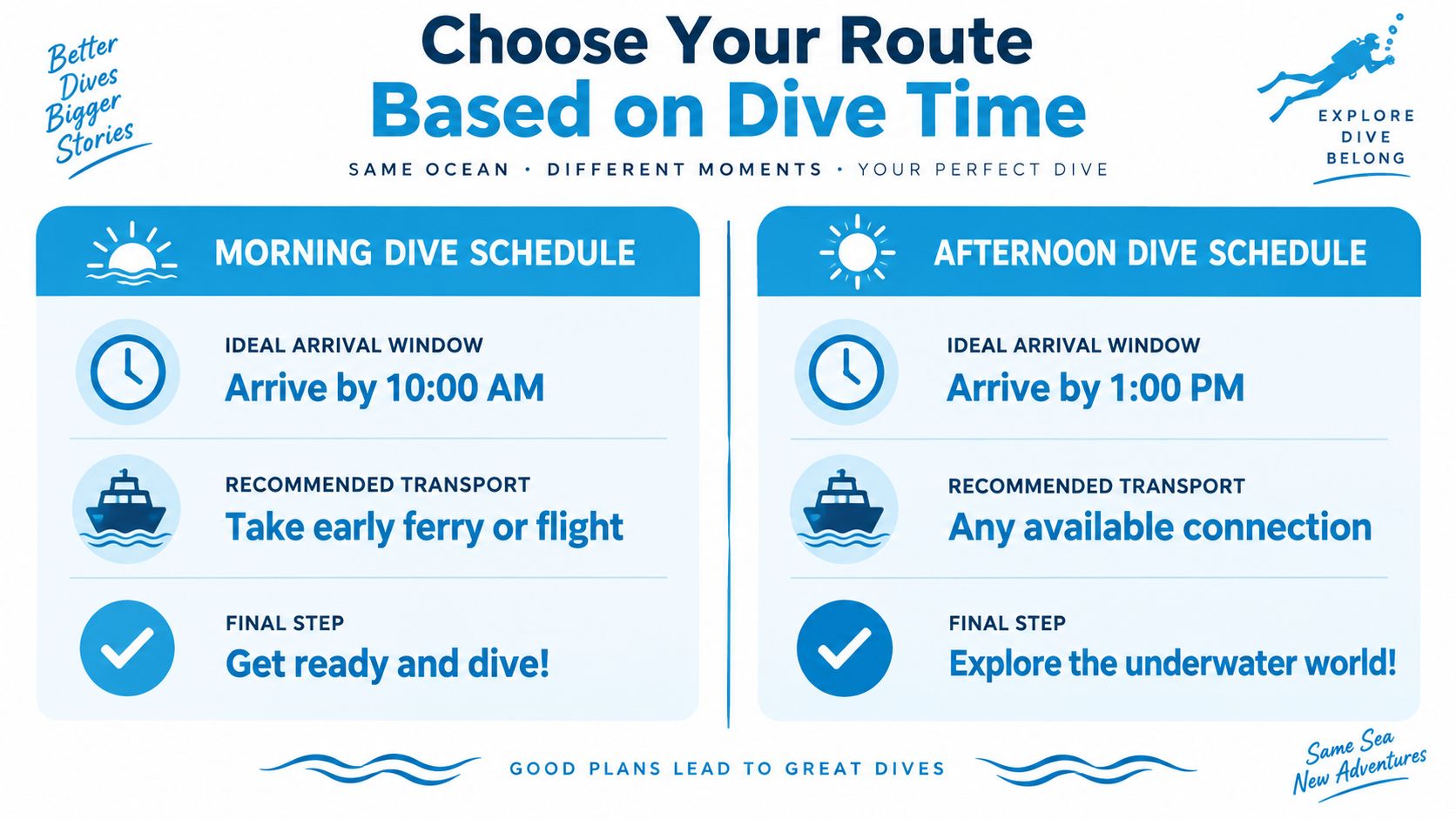
A dive trip works best when your arrival window matches the first underwater commitment on your plan. A morning boat, a snorkel session, and a multi-day course all create different pressure points, especially if you are landing with checked gear or coordinating a resort handoff. Treat transport and dive timing as one decision, because that is where most Cozumel arrival mistakes start.
Align your arrival window with your first underwater commitment
A morning dive boat leaves little margin for delay. If you are crossing from Playa del Carmen, the ferry, taxi, and shop check-in all need to line up cleanly, and any missed connection can turn a relaxed first day into a rushed one. For afternoon departures, you have more flexibility, but only if you still leave time to clear the terminal, get across the island, and check in without hurrying.
The practical cutoff is the operator, not the calendar. Some shops want divers to be in place long enough for paperwork, gear setup, and a safety briefing before they load tanks and assign the boat. If your first day includes scuba diving resorts in Cozumel or a coordinated resort pickup, confirm the handoff time with the operator before you book the crossing. That one call can save you from building an arrival around a schedule the shop will not use.
A rushed arrival does more than delay check-in. It can mean skipped safety briefings, wet gear being handled in a hurry, and a first dive that starts with everyone already behind schedule.
Carry-on priority: mask, meds, dive computer, certification card, charging cables, and anything you would not want delayed in checked baggage.
A simple arrival checklist for divers and snorkelers
- Boat departure with paperwork or gear fitting: Ask the operator what time they want you on site, then work backward from that time instead of from the departure time on the dock.
- Same-day arrival by ferry: Leave enough room for a delayed crossing, luggage handling, and the taxi ride after you step off in Cozumel.
- Direct flight with heavy equipment: Keep the critical items in your carry-on and confirm how your operator wants you to handle the rest of the gear after landing.
- First day includes a class or refresher: Build in time for buoyancy checks, equipment adjustments, and any session that could be pushed back by a late arrival.
- Weather-sensitive itinerary: Have a backup plan with your shop or resort in case the sea state slows the ferry or changes the boat schedule for the day.
The mistake I see most often is treating the arrival as if it ends at the airport or ferry dock. For divers and snorkelers, the test is whether you arrive with enough time to handle check-in, briefings, and gear without starting the trip in a hurry.