What if the question isn't where the prettiest reef is, but where a nervous first-timer can finish a course without wasting vacation time? The best places to learn to dive are the ones that make the logistics easy, the instruction calm, and the underwater environment forgiving. That's why this list focuses on how the trip works in practice, not just which destination looks best on a postcard. If you're trying to avoid rookie errors before you book, it's smart to avoid common scuba mistakes(avoid common scuba mistakes) and choose a place that supports your confidence from day one.
Table of Contents
- 1. Scuba Life Cozumel, Mexico
- 2. Pro Dive Cairns, Australia
- 3. Rainbow Reef Dive Center, Key Largo, USA
- 4. Buddy Dive Resort, Bonaire
- 5. Camel Dive Club & Hotel, Sharm El Sheikh, Egypt
- 6. Blue Marlin Dive, Gili Trawangan, Indonesia
- 7. Utila Dive Center, Utila, Honduras
- Top 7 Dive Learning Destinations Comparison
- Your Journey to the Deep Starts Here
1. Scuba Life Cozumel, Mexico
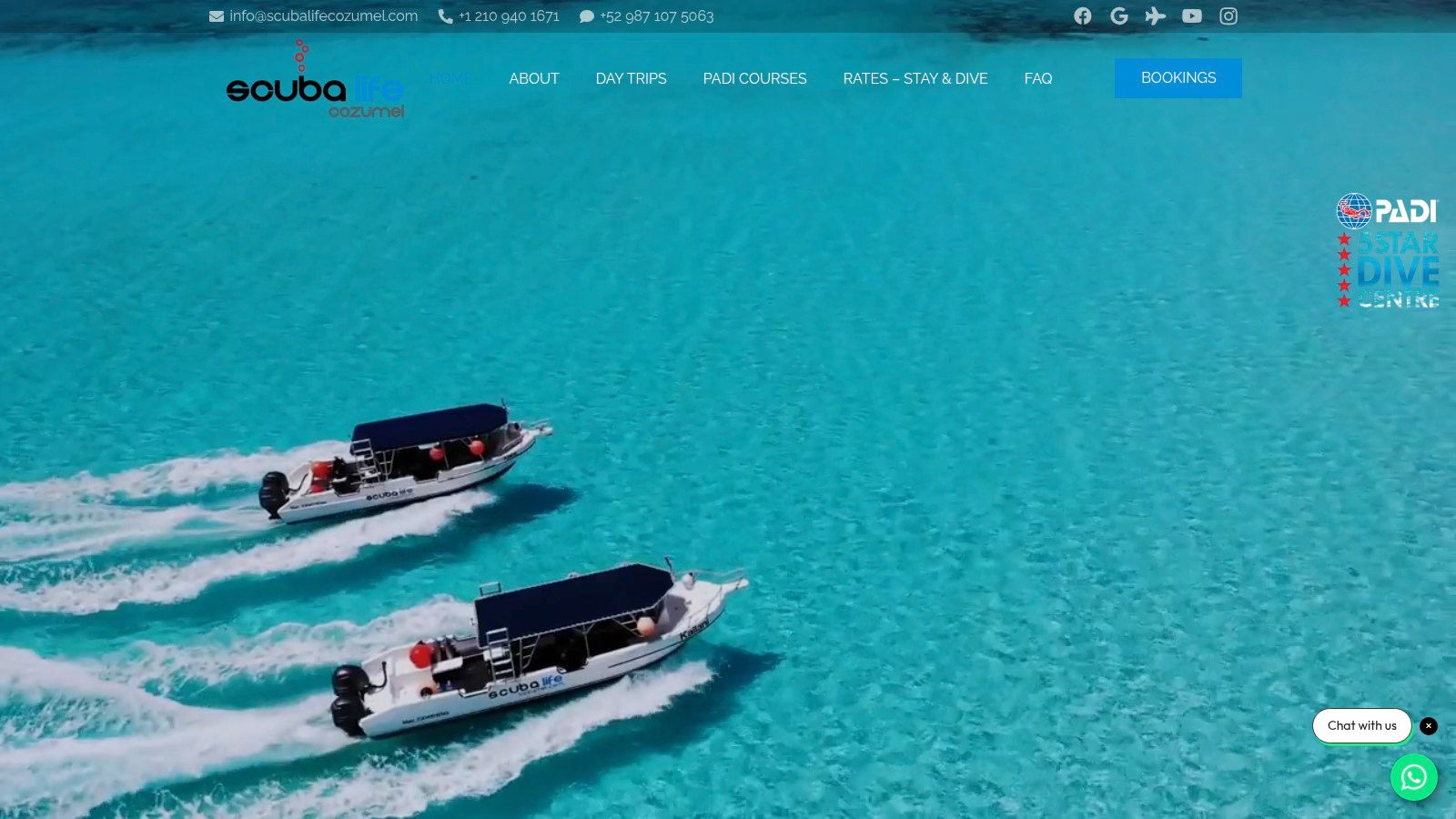
Scuba Life Cozumel stands out because it treats learning to dive like a carefully managed travel experience, not a loose collection of bookings. It's a PADI 5-Star Dive Center in Cozumel with guided two-tank boat dives, Discover Scuba sessions, private charters, snorkel trips, and a full PADI course catalog supported by PADI eLearning and its Open Water pathway on PADI Open Water eLearning. For a beginner, that matters because the same team can handle your first try-dive, your certification course, and your next-step training without forcing you to rebuild trust with a new operator each time.
Why it works for first-time divers
The biggest advantage is control. Cozumel's reef environment gives instructors a place to match site choice to diver confidence, and the operation's local knowledge spans 35+ named Cozumel dive sites, which makes it easier to avoid overreaching on day one. Reviews consistently point to organized pickups, well-kept boats, and patient guidance, and the center's DAN membership plus 100% AWARE partnership show that safety and stewardship aren't afterthoughts.
Practical rule: If you're nervous, choose the operator that can explain the course clearly before you arrive, then make the in-water part feel simple once you're there.
Best fit and trade-offs
This is a strong pick for travelers who want a polished, confidence-building start and don't want to manage every detail themselves. The shop also helps with stay-and-dive coordination, which is useful if you want accommodation and training lined up as one trip. The downside is simple, there's no published pricing on the main pages, so you'll need to check current rates or contact the shop directly before you book, and peak-season charters can fill quickly.
- Best for: first-timers who want strong supervision, families, and divers who like a smooth, high-touch setup.
- Works well because: resort pier pickup, onboard snacks and drinks, gear support, and site selection reduce stress.
- Less ideal if: you want the cheapest possible training option with minimal planning support.
2. Pro Dive Cairns, Australia
Pro Dive Cairns takes a more immersion-heavy path. Instead of a short resort-style introduction, it folds certification into a 5-day Open Water program with a 3-day/2-night outer reef liveaboard segment, so students train and keep diving in one structured setting. That format suits first-timers who want steady repetition, because it removes the stop-start rhythm that can make early lessons feel disjointed. If you are comparing course styles before booking, the practical question is whether you want that kind of reef-intensive setup or a simpler shore-based course, and the details at https://scubalifecozumel.com/padi-courses/ show how a different training path can look.
The liveaboard advantage
The Great Barrier Reef is the obvious draw, but the key advantage is continuity. Students move from pool and classroom work into open water without long gaps, and the operator's frequent course departures from Cairns make the schedule easier to line up. PADI's own 2026 guide highlights Queensland as a beginner-friendly place to learn because of the reef environment and the chance to build skills while surrounded by marine life, which matches the way Pro Dive Cairns structures its training.
That setup is efficient for confidence building. You get repeated practice, the same instructors stay with you through the course, and the boat environment keeps everything focused on diving instead of vacation logistics. For a first-timer, that can make the learning curve feel more manageable.
The trade-off is the commitment. A liveaboard course asks for more time on the boat and can feel like a bigger leap for anyone who gets seasick, wants a softer first exposure, or prefers shorter days ashore. Offshore weather can also affect the plan, so beginners should expect the schedule to change if conditions shift.
Who should choose it
Best use case: You want your certification to feel like a proper dive journey, not a single activity squeezed between other vacation plans.
- Good for: travelers who want to learn on the Great Barrier Reef itself, and divers who prefer a structured, immersive course.
- Worth checking: the operator's current eLearning path and departure calendar before you lock in flights.
- Less ideal for: anyone who wants the shortest or simplest possible certification trip, or who prefers to keep nights on land.
The setup makes sense if you value time in the water over convenience on land. It is a strong match for travelers who want to train, eat, sleep, and dive in one place, then come home with real comfort in boat routines and reef conditions.
3. Rainbow Reef Dive Center, Key Largo, USA
Rainbow Reef Dive Center is one of the easiest answers for Americans who want to start diving without a passport. It's a PADI 5 Star Career Development Center in Key Largo with on-site pool access, frequent class starts, Discover Scuba that can be credited toward certification, and Open Water training that includes PADI eLearning and boat dives. For many beginners, that combination cuts more friction than any tropical marketing line ever could.
Logistics are the key selling point
Key Largo gives you a practical training environment, not a fantasy one. The Florida Keys National Marine Sanctuary provides protected dive sites, and the shop's large instructor team makes scheduling easier than it is at smaller operations. That matters if you're working around a job, family plans, or a tight calendar, because missed dates and unclear class times are what usually derail a first certification attempt.
The trade-off is busier boats and classes. A higher-volume shop is often efficient, but it can feel less boutique and more structured than a tiny island center. Visibility can also be more variable than in some Caribbean destinations, so this is a place for learning real skills in a live U.S. travel setup, not necessarily for chasing the most cinematic first dive.
What makes it a smart beginner choice
The best course isn't always the one in the dream destination. Sometimes it's the one you can finish cleanly, with good support and no passport stress.
- Good for: mainland U.S. travelers, short-notice bookings, and students who want frequent departures.
- Strong point: on-site pool work keeps the early learning curve controlled.
- Watch out for: the busier pace, especially if you prefer small, quiet classes.
4. Buddy Dive Resort, Bonaire
Buddy Dive Resort is built for repetition, and repetition is what new divers need. Bonaire is famous for easy shore diving, and this resort leans into that with a dedicated academy, resort packages that combine lodging and diving, and shore-diving infrastructure that lets students practice without the pressure of getting on a boat every day. For a beginner, that can be the difference between feeling rushed and absorbing the basics.
Why shore diving helps beginners
The strongest feature here is the calm, current-free shore diving. That environment gives new divers a chance to work on buoyancy, mask clearing, and underwater comfort in a setting that doesn't keep changing underneath them. The resort's drive-thru tank service makes shore practice feel simple, which is a rare kind of convenience in dive travel.
This model is not perfect for everyone. If you want boat entry and exit practice as part of your early training, a shore-focused program won't give you as much of that experience. It's also usually pricier than stand-alone instruction, because you're paying for a resort setup rather than just a class.
Best fit for methodical learners
Buddy Dive makes sense if you learn best by doing the same thing a few times until it clicks. Bonaire's protected marine park and strong conservation ethos add to the appeal, especially for travelers who want to pair training with a destination that rewards careful diving habits.
Practical takeaway: If your confidence grows slowly, choose a place where you can repeat easy entries instead of one where every dive feels like a new logistical puzzle.
5. Camel Dive Club & Hotel, Sharm El Sheikh, Egypt
Camel Dive Club & Hotel is one of the most efficient all-in-one options for learning in the Red Sea. The setup combines accommodation, training, and boat diving, so the whole course feels stitched together instead of pieced together from separate vendors. That matters a lot for first-timers, because fewer handoffs mean fewer chances for confusion, missed transfers, or misplaced gear.
Resort simplicity with serious diving
Sharm El Sheikh is repeatedly identified by PADI as a strong learn-to-dive destination because of its warm water, great visibility, and easy access to beginner-appropriate sites. Camel Dive Club fits that model well with both PADI and SSI course options, seasonal packages, and transparent notes about what's included. For travelers who want to combine certification with a hotel stay and boat access, the convenience is hard to beat.
The main trade-off is travel distance if you're coming from the Americas, and package pricing can vary by season, so you need to confirm exactly what's included before paying. If you like clear structure, that's manageable. If you hate planning, it can be annoying.
Why beginners like this format
The resort format reduces mental load. You wake up near the dive center, train in a warm-water environment, and head straight into your course without juggling taxis and separate check-ins. For many nervous beginners, that simplicity is what keeps the course fun instead of stressful.
- Good for: holiday divers who want everything under one roof.
- Strong point: warm Red Sea conditions and easy resort logistics.
- Check carefully: seasonality, transfer details, and what equipment or materials are included.
6. Blue Marlin Dive, Gili Trawangan, Indonesia
Blue Marlin Dive in Gili Trawangan is the classic island answer for learners who want warmth, simplicity, and a relaxed pace. The island setting gives you sheltered training sites, short boat rides to reefs, and a vibe that suits people who feel intimidated by a big, formal training environment. It's also one of the most practical Southeast Asia options for travelers who want a certification trip that doesn't feel heavy.
Small island, easy learning curve
Gili Trawangan appears on Lonely Planet's shortlist of top places to learn, and that fits the on-the-ground reality: beginners tend to do well where training sites are sheltered and logistics are light. Blue Marlin's Open Water and Advanced courses are bookable online, and the island setup keeps the early dives manageable. You're not dealing with long commutes or complicated transport, just a straightforward progression from briefing to water to reef.
The trade-off is popularity. Peak periods can mean larger class sizes, and getting to the island means an extra ferry leg from Bali or Lombok. If you're patient with travel transitions, the payoff is a warm-water environment that feels easy to settle into.
Good choice for budget-minded learners
Blue Marlin suits travelers who want a straightforward certification holiday with decent access to marine life and no unnecessary drama. It's especially attractive if you'd rather spend your energy learning the basics than managing a more formal resort experience.
On a good beginner day, this is what you want, warm water, shallow training, and an instructor who doesn't rush the pace.
7. Utila Dive Center, Utila, Honduras
Utila Dive Center is the most training-focused option on this list, and that matters if you want a school that treats progression as a long-term path, not a one-off certification. The shop offers a full PADI course ladder up to Instructor, multiple Platinum Course Directors, published IDC calendars, internship options, and Open Water training with eLearning support. That setup says a lot about the beginner experience, because centers that train professionals usually have tighter coaching habits and clearer standards for new divers too. If you are comparing course providers rather than just island names, it helps to look at the training culture first. For a useful point of comparison, see the course structure at https://scubalifecozumel.com/scuba-courses-cozumel/.
Why high-volume training can help
Utila has the feel of a real dive education hub. The local sites are clear and shallow enough to feel forgiving for first certifications, and the year-round course schedule means you are not waiting around for a narrow training window. That combination makes it easier to finish Open Water without losing momentum, which is useful if you are traveling on a fixed route or trying to keep costs under control.
There are trade-offs. Getting to the island takes more effort than a mainland base, and Utila's party-island reputation will not suit every learner. Some first-timers want quiet evenings, early starts, and a low-key setting after class, while others are fine with a more social atmosphere once the tanks are rinsed and the paperwork is done.
The practical upside is that you can build dive habits quickly here. A center with a heavy course load sees the same beginner mistakes every week, so instructors tend to be efficient about buoyancy, mask clearing, and pacing in the water. That kind of repetition is useful if you want confidence, not just a card in your wallet.
A smart option if you want progression
If your goal is to keep diving after certification, choose a center that already has a serious training culture. It usually shows in the way beginners are coached.
Utila Dive Center fits travelers who want a structured path from Open Water onward and a place where moving into the next course is straightforward. It also suits people who value instructor depth and a busy dive school environment over a resort feel. If you want a calm escape with very little nightlife, other destinations on this list will suit you better.
- Best for: students who want a clear path from Open Water into more advanced training.
- Useful for: travelers looking for value, repeat dives, and a strong instructor pipeline.
- Less appealing if: you want a quiet, resort-style base with minimal social scene.
Top 7 Dive Learning Destinations Comparison
| Operator (Location) | Implementation 🔄 | Resource requirements ⚡ | Expected outcomes ⭐ | Ideal use cases 💡 | Key advantages 📊 |
|---|---|---|---|---|---|
| Scuba Life Cozumel, Mexico | Moderate 🔄, guided boat ops and PADI programs | Moderate–High ⚡, boats, crew, rental gear, logistics | High ⭐⭐⭐, reliable instruction & quality site access | Certified divers seeking top sites; supportive first-timers; private charters | World-class reef sites; strong safety (DAN, 100% AWARE); organized logistics |
| Pro Dive Cairns, Australia | High 🔄, integrated liveaboard + classroom schedule | High ⚡, liveaboard, offshore staff, multi-day logistics | High ⭐⭐⭐, immersive GBR certification with many dives | Learners wanting liveaboard immersion and multiple reef dives | Liveaboard experience on the Great Barrier Reef; frequent departures; strong reputation |
| Rainbow Reef Dive Center, Key Largo, USA | Low–Moderate 🔄, pool + boat-based courses at scale | Moderate ⚡, pool facility, boats, large instructor team | High ⭐⭐⭐, consistent, repeatable certification outcomes | US-based students; flexible scheduling; frequent course starts | On-site pool; high class frequency; protected Florida Keys sites; easy access for Americans |
| Buddy Dive Resort, Bonaire | Low 🔄, resort-based shore training and eLearning | Moderate ⚡, resort packages, shore diving infrastructure | High ⭐⭐⭐, lots of in-water practice and shore repetition | Beginners who benefit from calm shore entries; resort learners | Drive‑thru tanks; house reefs for repeated practice; bundled lodging + diving |
| Camel Dive Club & Hotel, Sharm El Sheikh, Egypt | Moderate 🔄, resort + boat package delivery | Moderate ⚡, hotel + dive center resources; seasonal variations | High ⭐⭐⭐, warm, clear Red Sea conditions aid learning | Holiday certifications; travelers wanting all‑in‑one resort logistics | Rich Red Sea biodiversity; PADI & SSI options; combined accommodation and diving |
| Blue Marlin Dive, Gili Trawangan, Indonesia | Low 🔄, island, sheltered training sites | Low–Moderate ⚡, island ferry access, basic dive facilities | Good ⭐⭐⭐, cost‑effective certification in calm conditions | Budget travelers/backpackers; nervous beginners | Very affordable; calm shallow sites; short boat rides to reefs; multilingual instructors |
| Utila Dive Center, Utila, Honduras | Moderate 🔄, high‑volume training hub with pro tracks | Low–Moderate ⚡, competitive pricing, island logistics | High ⭐⭐⭐, strong value and pro‑development pathways | Budget cert seekers; those pursuing instructor/pro tracks | Affordable pricing; year‑round schedule up to Instructor level; chance of whale sharks (seasonal) |
Your Journey to the Deep Starts Here
Choosing where to learn to dive is really choosing how you want to learn. Some people thrive in a resort setting where everything is handled for them. Others do better with a training hub, a liveaboard rhythm, or a quiet island where they can repeat the basics until they feel natural.
The smartest move is to match the destination to your travel style, your confidence level, and the kind of support you want on day one. That's why the best places to learn to dive aren't just pretty. They're the places that make the course easier to finish, safer to enjoy, and more likely to turn a nervous first breath underwater into a long-term hobby.
Scuba Life Cozumel is a strong fit if you want guided instruction, organized logistics, and a center that can handle everything from Discover Scuba to full PADI training in one place. If you're comparing options and want a team that knows how to support beginners without making the experience feel scripted, reach out and see how their approach fits your trip.
If you want a beginner-friendly Cozumel experience with PADI 5-Star standards, Discover Scuba options, and full course support, start with Scuba Life Cozumel. Their mix of training, boat access, and logistics support makes them a practical choice for first-timers who want a smooth path into diving.